27.7.11

Norway Terror Accused Breivik Loves Israel

Instead of trying to exterminate Europe's Jews, Breivik suggests Hitler ought to have enforced Zionism: "He could have easily worked out an agreement with the UK and France to liberate the ancient Jewish Christian lands with the purpose of giving the Jews back their ancestral lands," Breivik writes. "The UK and France would perhaps even contribute to such a campaign in an effort to support European reconciliation. The deportation of the Jews from Germany wouldn't be popular but eventually, the Jewish people would regard Hitler as a hero because he returned the Holy land to them."

Read More about Norway terror accused and Israel.

Also, Israelis debate on the web: did Norway get what it deserved?

26.7.11

Iran draws the line with Turkey on Syria

Behind Iran's new Syria move is a calculated gamble that contrary to some Western perceptions, the Assad regime is not completely isolated and still enjoys a considerable mass following. This is reflected in huge pro-government rallies consistently ignored by the Western media, and that with sufficient internal and regional support, Damascus could survive and ride out the current storm. 

Complete article here.
--------------------------------------------------------------------------------------------------

23.7.11

Is Sunni Extremism Getting out of Hand? And what to do about it...

Today's Norway bombing may still turn out not to be perpetrated by Sunni Extremists, however this is the current hypothesis (the article on this link was amended later to point to what is known at this moment that the shooting and probably the bombing were all the doing of a lonely white norwegian man acting on the basis of probably right wing political motives including hatred of Islam).

Sunni extremism has a long history of being used by different countries to fulfill a political aganda. The Mujahidin were used by the west in order to oust the soviet republic from Afghanistan. But this utlimately resulted, after the end of the war in Afghanistan, with a disorientation of the goals of jihad to finally rest their sight on the US with multiple targets hit by Bin Laden and his allies over several years that culminated in 9/11. Whatever the official reasons behind 9/11, the reality is that global sunni jihad was getting out of hand the moment it losts its main enemy, the USSR. New goals were eyed by these jihadis including their own home countries, mainly Saudi Arabia and Yemen. This is probably the main reason why Saudi Arabia worked tirelessly to maintain the money flowing to the global sunni jihad while succeeding at keeping its monarchy out of its line of sight. Evidence from the 9/11 commission points to this complexe relationship between the kingdom and the global sunni jihad.

There are also many local examples in the ME of this flow of Sunni jihad from one country in crisis to another. Lebanon experienced this first hand when an extremist sunni group, Fatah El Islam, fought the Lebanese army for three months in the Palestinian refugee camp of Nahr El Bared which led to the total destruction of the camp in 2007. This group was formed by former Al Qaida combatants in Iraq. It infiltrated Palestinian camps in Lebanon with the financial help of local sunni politicians.

Similarly, there is a flow of sunni jihadis now from Iraq, Afghanistan and Pakistan, from where the US has been reducing its military presence and from where Nato, exhausted by the Lybian campaign, will be pulling out soon, to countries experiencing the Arab spring. The Arab spring could well be hijacked by these extremist movements. In Syria for example a genuine revolution based on specific grievances turned quickly to an organised armed revolt the Syrian government has been fighting for the last four months with these movements. There is an indication that Syrian exiles, as well as Lebanese politicians who are opposed to the Assad regime, are trying to use these movements. There is also an indication that the Lybian revolution has been infiltrated by Al Qaida.

There is actually two possibilities to contain this flow of sunni jihadis:

1. The jihadis are used in an open sectarian war against Shias and this is a prospect the neocons, Israel and Saudi Arabia have been caressing recently because it serves the immediate political goals of each of these countries or political movements. It keeps the kingdom and other Arab monarchies, for now, out of the line of sight of the jihadis for political vindication and unrest due to the fact that the Arab spring proved to be a fertile ground for Sunni Islamist groups activism, and for the neocons and Israel, it pits sunnis against shias, a strife that may keep Arabs busy and Israel safe to occupy and oppress, with its usual unrestrained will, Palestinians and the land of Palestine...The Arab spring took Arab monarchies by surprise and they are trying now to protect themselves against it while playing the counter revolution in countries where the Arab spring took hold by using Sunni extremists.

This scenario is gloomy since, even though it may cynically seem at first contained to the US, Israel and the EU, touching only middle eastern countries where citizen lives are of absolutely no importance to the west, there is no guarantee that it will not spill and materialise in terror threats in the west, since the west will be actively engaged in the political transformations and wars of middle eastern countries, as ever.

2. The west is serious about the war on terror and will work to contain the global jihadi network with its many affiliates. In this case, the west won't be fuelling sectarian sunni-shia tensions and wars in the middle east since these wars will increase the likelihood that we will not be able to get rid of this network for a long time and that the west might see some of its side effects if we are to believe that 9/11 was a side effect of the end of the war in Afghanistan against the USSR.

There are many indications now that we are heading for the first case scenario, the first of these indications is the Qatari channel Al-Jazeera's misleading coverage of Syria spilling sectarian hate through sunni tele-preacher and Al-Jazeera frequent commentator, Al Qaradawi*, from day one of the Syrian revolt. But those who think that sunni-shia tensions will somehow weaken the global sunni jihadis might just be playing with fire, because as much as they think they are using these sunni jihadis to attain their political goals, as much as those same jihadis will be using them to attain their own political goals and it will be a slow war of attrition, including many regional wars, for which Arabs and Muslims will pay a hefty price in lives, livelihood, progress and development...


*Al Qaradawi moving to Norway!

Initial claim of responsibility for the Oslo attack.

Norway charges radical cleric with death threats.

P.S. A reader commented on the term 'Sunni extremism'. He wrote that 'Salafi' would be a fairer term. I think he is right. However, I chose 'Sunni extremism' because this extremism is actually condoned by countries with a Sunni majority like Saudi Arabia and Gulf countries who finance the terrorists worldwide in their operations against western targets and direct them regionally at shias in Bahrain, Iraq, Lebanon and Syria.
------------------------------------------------------------------------------------------------

22.7.11

Is the US Cowed by Saudi Arabia because of Oil?

The role of Saudi Arabia in 9/11 has never been investigated and that's not because the lack of evidence.  This evidence won't go away and is reemerging at the occasion of the10th anniversary of 9/11.

Saudi Arabia: Friend or Foe?

The Kingdom and the Towers
-------------------------------------------------------------------------------------------------

21.7.11

'Unfolding The Syrian Paradox'

Although the link to this article by Alastair Crooke is featured in one of my latest posts, I wanted to highlight the article again for it offers one of the most complete analysis on what is happening in Syria now as well as revealing the nature of the Syrian revolution 2011.
Can Syria properly be understood as an example of a "pure" Arab popular revolution, an uprising of non-violent, liberal protest against tyranny that has been met only by repression? I believe this narrative to be a complete misreading, deliberately contrived to serve quite separate ambitions. The consequences of turning a blind eye to the reality of what is happening in Syria entails huge risk: the potential of sectarian conflict that would not be confined to Syria alone. 


One of the problems with unfolding the Syria paradox is that there is indeed a genuine, domestic demand for change. A huge majority of Syrians want reform. They feel the claustrophobia of the state's inert heavy-handedness and of the bureaucracy's haughty indifference toward their daily trials and tribulations. Syrians resent the pervasive corruption, and the arbitrary tentacles of the security authorities intruding into most areas of daily life. But is the widespread demand for reform itself the explanation for the violence in Syria, as many claim? 


There is this mass demand for reform. But paradoxically - and contrary to the "awakening" narrative - most Syrians also believe that President Bashar al-Assad shares their conviction for reform. The populations of Damascus, Aleppo, the middle class, the merchant class, and non-Sunni minorities (who amount to one quarter of the population), among others, including the leadership of the Sunni Muslim Brotherhood, fall into this category. They also believe there is no credible "other" that could bring reform. 
What then is going on? Why has the conflict become so polarized and bitter, if there is indeed such broad consensus? More here

-----------------------------------------------------------------------------------------------

Neocons wishing for a Ramadan sectarian bloodbath in Syria! (via FLC)

Crooke is right about western funded Syrian exiles using salafis in the Syrian revolution 2011 but ultimately salafis also will use exiles. Here is a facebook page for the Homs revolution: on the upper right band they have a sourate in Arabic, it says: 'Paradise exists in the shadow of the sword' (attention, islamist facebook pages of the Syrian revolution in english or other non arabic languages do not show material that can offend western readers).
-----------------------------------------------------------------------------------------------

19.7.11

Syrian Protesters In Homs (UPDATED): The Government killed And Mutilated Three Of His Own In Order To Incite Sectarian Strife!

This kind of crazy propaganda from Syrian protesters reporting to western news outlets has been going on for long now. Giving credence to such statements is like giving credence to the saying that the US government was behind 9/11 in order to invade Afghanistan and Iraq. And giving credence to these statements from the Syrian revolution 2011 is like giving credence to the Syrian regime explaining that the bloodshed in Syria is done exclusively by protesters who want to accuse the regime of the bloodshed! So either we believe all three possibilities or we reject them alltogether! Any other alternative is like picking and choosing what we want to believe in without further evidence.


On Sunday, residents of Homs, Syria’s second-largest city, discovered the bodies of three Alawites mutilated and dumped in a deserted area, according to Omar Idlibi of the Local Coordination Committees, a group that helps organize and document protests. All three were armed government loyalists, he said.
News of the deaths enraged other Alawites, who went on a rampage, according to residents and activists. Three people were killed, including a mother of three, and scores of shops owned by Sunnis were burned and vandalized, Mr. Idlibi said.
“The reaction was so violent and quick that we suspect the regime had a hand in the killings,” Mr. Idlibi said.

For how long will they be lying about the blood on their hands? And for how long western media are going to give credence to these lies by publishing them?

UPDATE:

A letter on the sectarianism of the protesters

It seems that the main feature of the Syrian revolution 2011 is the alliance between western (US) funded Syrian exiles and salafis, the former using the latter as proxies in their attemtp to topple the Assad regime, but ultimately salafis also will use exiles. Here is a facebook page for the Homs revolution: on the upper right band they have a sourate in Arabic, it says: 'Paradise exists in the shadow of the sword' (attention, islamist facebook pages of the Syrian revolution in english or other non arabic languages do not show material that can offend western readers).
------------------------------------------------------------------------------------------------

18.7.11

Bashar El Assad and Legitimacy, Updated

One must recognise that Bashar El Assad is still, after four months of unrest, hugely popular in Syria. This is a fact, not an Al-Jazeera fabricated story. This is the fourth pro regime rally in Syria since March. The Syrian revolution 2011 has never been able to rally as much.

If one adds to this three other facts:

1. The hijacking of the Syrian Revolution 2011 by USrael and the Muslim Brotherhood;
2. The first USrael influence free government in Lebanon since years. The Lebanese government has been chosen by a majority of Lebanese who want to break free from USrael's influence and who wouldn't certainly like to see this influence resurrect in Syria with the toppling of the Assad regime;
3. The Syrian Revolution 2011 inability to present a united front against the Assad regime;

It is unlikely that we will see any change in the balance of support for the regime and the revolution 2011, from internal and external actors, any time soon. The balance might even shift in favour of the regime.

It is fair to say that right now Bashar El Assad still has the legitimacy of the majority of Syrians and there is no reason for this fact to change anytime soon. Also, people who are trumpeting a change in the fortunes of the regime through the faltering of the Syrian economy are undermining their own chances of success by overlooking the fact that putting extreme pressure on the Syrian economy can also eliminate the possibility of a successful and peaceful transition of power through the collapse of Syrian institutions and therefore make less likely a change in the current support for the regime from China and Russia which is based on the refusal of an Iraq like upheaval in Syria.

But the most important fact that is overlooked right now is, ironically, the support for the Assad regime in Lebanon across all sects, a support made possible by the overt enmity of March 14 toward Bashar El Assad and the little popularity this movement has right now in Lebanon (note that the recent support for the 'Syrian people' from Hariri masks a long history of abuse and killing of Syrian workers by Hariri's and March 14th militia in Lebanon).

UPDATE:

ALASTAIR CROOKE: Unfolding the Syrian paradox

Obama's strategic failure in Syria

------------------------------------------------------------------------------------------------

16.7.11

The Illiberal Tendencies Of The So Called Liberal Syrian Opposition

From Angry Arab:

...They call for democracy in Syria...in the mouthpieces of Saudi princes; they call for freedom for Syria...in publications that have excelled in racism against the Syrian people (An-Nahar and Al-Mustaqbal); they call for the safety of the Syrian people...in publications that have been responsible for creating the climate that led to the murder and abuse of Syrian workers in Lebanon;  they call for secularism while aligned with the Muslim Brotherhood; they talk about gender equality, and yet a woman who writes what they don't like is attacked in the vulgar manner of Saudi preachers...

I know that Syrian regime supporters cannot stomach Angry Arab, but one has to recognise that he has been consistent in his criticism of Arab regimes and Arab political movements, something rarely achieved on blogs, not to mention the overtly biased majority of mainstream Arab media...

14.7.11

Lebanon: A Tale Of Two Governments And Two Visits (part 1)


I was recently in Lebanon on a vacation with my family. The internet is so slow there that for those who are used to high speed like me it feels like there is no internet. I could barely check my email. While my visits to my native country are usually rare, this visit was my second this year. I have been in Lebanon just six months ago, alone, for my father's funerals. My first visit coincided with the fall of the Hariri government and my second visit ended with the first indictments issued by the STL and the confidence vote for the new Mikati government. One might think that the political landscape between the two visits might have radically changed but, to my surprise, the people I know and met during the two visits are the same and the country is the same: high unemployment, inflation, poor electricity and internet service, and social discontent with the former majority across the sectarian divide. Except for Tripoli and Akkar's poor (see UNDP report pages, 10,11, and 18) who are exploited by Hariri and paid only episodically for sectarian agitation, ordinary Lebanese are preoccupied by daily survival rather than sectarian politics.

Cellphone service. The cellphone I bought experienced some interruptions and was without help in remote areas of Lebanon. I bought my sim card in Beirut. It was from MTC Lebanon which is understood to be an affiliate of Saudi Telecommunication Company (STC). I immediately phoned relatives to give them my local cellphone number and was met with disbelief at the number. Two or three persons even called me just after writing down the number just to check that the number was right. This is because my number started with 76 and they couldn't understand how MTC numbers jumped from 71 to 76 in such a short time. There are no MTC numbers starting with 72,73,74,75 operating in the country I was told and the number 76 was fairly recent. My guess is that the missing numbers all went to Syria to document the Syrian revolution 2011.

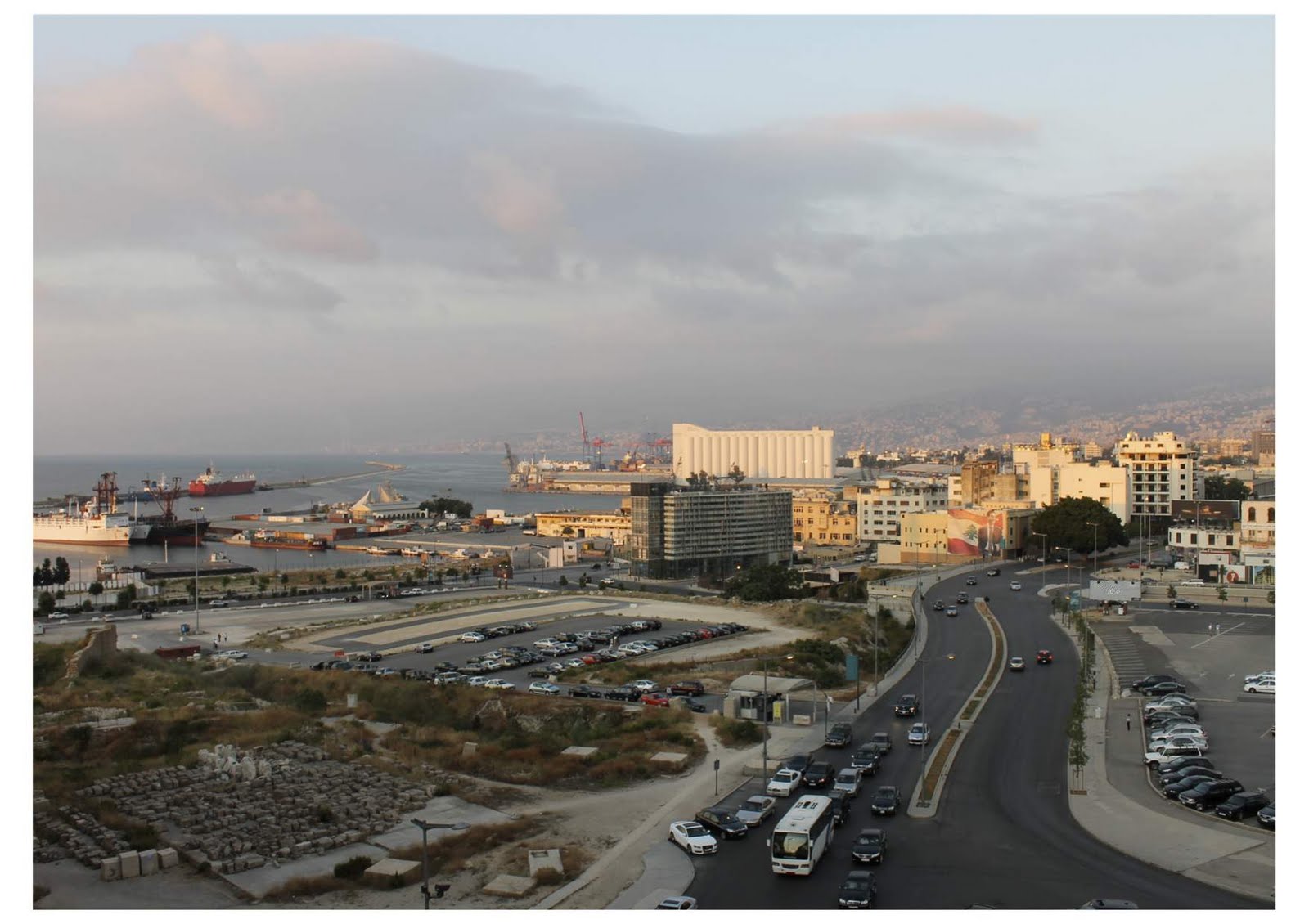
The state of Beirut and the state of Lebanon.  During my previous visits, I had barely toured Beirut. I can honestly say that I didn't really get to see Beirut after the end of the civil war except for one day spent around the Solidere area that was reconstructed by Hariri and the national museum in 2005 after the assassination of Rafiq Hariri. I have family in the north and I usually stay there when I visit Lebanon. This time we decided to explore the new Beirut before going north. I was in for a surprise. The corniche from Martyr square to Raouche is now mainly blocked by buildings, private beaches, real estate developments. We took upon us to walk the entire distance between Martyr square and Raouche but had to abandon the project near the lighthouse (manara) because we barely saw the sea while having to deal with narrow sidewalks that gave way most of the time to parked cars pushing us toward the heavy traffic under a blazing sun.


I remember my delight when I was a child walking the corniche with my father with the Kaa'k vendors and the sea nearby. But the seaview is now blocked by private buildings and businesses. For the following days we explored Beirut mostly walking, we went to Hamra, Gemmayzeh, Achrafieh, AUB, Sanayeh gardens, etc... Walking Beirut's streets was difficult. There is no place in this city for pedestrians. Naively, I expected to see a city that would have recovered from the civil war. To my surprise, the reconstruction effort for which Rafiq Hariri is so often credited is confined to part of the city, the new business district and the one that consolidated the Hariri financial empire while the rest of the city still has to recover from the 1975-1990 civil war. Around the solidere area, there are many building projects for more high end luxury apartments and shopping malls (the latter term has now entered the Lebanese dialect), one of which, near the Saraya, is designed by no other than famous French architect Jean Nouvel. I wondered how many Lebanese can buy these apartments and shop in these luxury malls?

Beirut's 'reconstruction' at the hands of Hariri was and still a high profile looting operation that has dispossessed Beirutis from their city. One taxi driver told me that his father had a shop in the old Beirut souk that he sold unwillingly to Rafiq Hariri for 5000 dollars which is the actual average price for one meter square in the area. Hariri took Beirut by surprise at the end of the civil war when most Lebanese were still vulnerable and transformed part of it into something else, not only did he work swiftly in total disregard to Beirut's rich archeological past and to the dismay of archeologists, but he transformed Beirut into something that most Lebanese do not recognise as their city, a heaven for the super rich, Gulf countries type, where they can feel at home. There are still many traditional old houses in Beirut but most of them are in ruins. We wanted to take a picture of an old house near Sanayeh garden and a man nearby prevented us from doing so. He told us that the owner does not want people taking pictures of his house.


People are tense. The cost of living is high. Real estate prices are high. And there are no satisfactory essential public services from education to health care. Health care is exapnsive. Even doctors working at private clinics are poorly paid and it is the clinics owners who make the money. Lebanon is trying to postion itself on the market of medical tourism.

There is no urban planning in Beirut. Beirut is the only city that, after a nearly total destruction by the war, did not bother with urban planning. There are architecturally disastrous real estate developments all across the city, not only in the Solidere area. I was told that Gemmayzeh residents, a conservationnist neighbourhood in Beirut, fought and still fight against savage building developments.

We also drove through south Beirut where the effects of the 2006 destruction by Israel are invisible because the reconstruction effort in this area was led by Hezbollah. One can still feel the effects of the 1975 civil war in most of Beirut areas except the 2006 heavily bombarded south Beirut.

Cars and transportation.   Hiring a car proved to be a difficult and treacherous transaction. I booked through internet with an international company. On site, I was given an old car, it read 50000 Kms but felt older on the Chouf area roads and when I called to complain I was told that the economic situation has been so difficult the last two years that they haven't been buying new cars. I gave the car back and rented from another company operating outside Beirut. Despite high gaz prices with a full tank costing between 20% and 10% of the average monthly salary, Lebanese love their cars. They don't walk anymore. There is no public transport but private collective taxis (6 seats and more) operate in the city, between Lebanon's main cities, and between cities and even remote villages, often every half an hour.

There is no concrete presence of the state in everyday's life. Even in the newly publicised nature conservation areas like the Cedar reserves and the Lebanon Mountain trail, minimal financial means and measures are absent. Lebanon is an example of the catastrophic effects of neoliberal policies in countries where central governments are weak and civil society is non existent. However, one thing is sure, there is an awareness, among the general public, that this catastrophe was brought upon them by Rafiq Hariri. There is little love for him and his son among the general public and across all sects right now in Lebanon.


The STL (Hariri tribunal) and the indictment.  Only Brammertz pursued the business motivated trail in the assassination of Rafiq Hariri. There is a big red 'Stop Solidere' sign posted on the walls of the St Georges hotel right now in Beirut near the site where the bomb detonated. The site of the assassination is symbolic enough.  It is thought that initially the hypothesis of an underground bomb was advanced in order to lure investigators to the trail of a political assassination.  It was known later that the bomb was a roadside bomb and we now know that IED are now the weapons of the poor.  So Hariri could have been assassinated by anybody. 

There is resentment among Lebanese citizen about what Hariri had done to them and to their city. Only few were able to resist Hariri's offers when he decided to buy the whole center town area and Lebanese realised very late how quick Hariri was at transforming their architectural heritage. The egg building stands, like the last Celtic village resisting the Romans in 'Asterix', as a testimony to the scars of war and to Lebanese awakening about their heritage just few meters from Hariri's final rest place and from the new carefully polished downtown Beirut, for how long? Ordinary citizen, who had their shops and their livelihood in the area, financially and psychologically broken by years of civil war, had to sell because Hariri had an offer for them they could not refuse. I think what happened here is a vivid illustration fo the shock doctrine. I was in Beirut when the indictment was issued and it was a non event. Lebanese, from all sects, have come to realise what Hariri did to their country and there is little love for him right now in Lebanon where the economic situation is difficult. The Al Jadid TV interviewed people just after the indictment was issued asking if they were ready to go to the streets to demand justice for Hariri and even among the people who were visiting his grave the answer was 'no'. And during my stay in Beirut, I crossed the martyr square area daily and never saw more than one or two people at the grave, most of the time there were none.

After few days spent in Beirut, I was finally relieved to head for the north where my time was going to be split between tourism, family meetings, and walks in my father's land.

Article and pictures about the egg building.

To better understand the short history of the post civil war years in Lebanon, here is a must read article from blogger Loubnan Ya Loubnan (in French): Au Liban, une mafiocratie contre son peuple.
This post will be continued...

5.7.11

The Special Tribunal For Lebanon: Justice For All Or Justice For The Cedar Niggers?

Days after the nth leak, the Special Tribunal For Lebanon (STL) announced his indictments on July 2nd accusing, what we now know at least since 2009, four members of Hezbollah. The announcement coincides with the new Lebanese government's statement of principle on the STL going for a confidence vote in the Lebanese parliament soon, and with the positive developments for Assad in Syria coming after an intense diplomatic and political activity in which the Syrian president met with representatives from the US and the UK, and in which the regime and the internal opposition seem to be willing to find a way out of the crisis.

Hezbollah reacted immediately yesterday with a speech from its leader Hassan Nasrallah aired on major Lebanese tv channels.

Nasrallah's speech after the indictment.

The STL has been biased and politcised from its inception and a tool against the Lebanese resistance. It is no coincidence that he first leaks pointing to a possible Hezbollah role in the assassination of Rafiq Hariri were published in the Figaro just after Israel's defeat in the 2006 war against the Lebanese resistance. This was an indication that the tribunal became very quickly a tool for the US and Israel to achieve against the Lebanese resistance what they were not able to achieve with the July 2006 war.

Nasrallah spoke of the flaws in the investigation at lenght and provided new disturbing material about the corruption, politicisation and the infiltration of the tribunal by Israel and the CIA. here are some points:

1. The lonely trail of the investigation or the mono rail.  While Brammertz, the second UNIIC chief prosecutor who came unde fire fromm March 14th, pursued more than one trail of investigation, the focus of the investigation of the first and third prosecutors (Mehlis and Bellemare) was alternatively on Syria and Hezbollah.  They never pursued the business trail and never considered seriously that Israel might have interest at throwing the country in civil war again.  This is despite the fact that Hezbollah provided evidence that Israelis were monitoring the site of the bomb that killed Hariri and his daily route days before and on the day of the assassination. The evidence was judged circumstancial and was not investigated.

2. The tight cooperation between Israel and the tribunal. Not only Israel was not investigated but the tribunal sought information from Israel. It also tranferred its computers and files through Israel when it moved its operations center from Lebanon to the Netherlands, instead of transferring them through Beyrouth airport. This last information was obtained thanks to Hezbollah intelligence and Al-Manar aired a picture of the Israeli customs authorisation as a proof. Israel has its footprints all over the tribunal up to its president, Antonio Cassese, 'a great friend of Israel'. Al Manar aired a video in which one of cassese colleagues was paraising him as a great friend of Israel at the 2010 annual Herzilya conference where Cassese was due to attend.

3. The role of foreign western intelligence agencies in the investigation, unsavoury characters. Hezbollah, once again, was able to gather information on some key individuals who worked for Daniel Bellemare, the chief prosecutor at the STL. There is Najib Nick Keldas, australian, ex CIA, had a role in the massacre of Bir El 'Abd (one has to be aware here that most western sources consider Imam Fadlallah, the target of the bomb that killed more than eighty, erroneously as the spiritual guide of Hezbollah, which is not true, Fadlallah was the spiritual guide of the Shia community in Lebanon). Than there is Robert Baer, the much talkative ex-CIA, who was a special agent assigned to track Mughniyyeh and failed to kill him. Mughniyyeh was a high ranking Hezbollah operative who was later killed in Damascus. Baer also had a role in Bir El Abd Massacre. Then there is Michael Taylor, who worked for Scotland Yard on Islamist terror. Dorede Bcherraoui (Lebanese living in France), who had a role in the false witnesses who previously misled the tribunal to accuse Syria and the four Lebanese generals. And finally, Darrel Mandir, who continues to work for the CIA.

4. The corruption of prominent members of the tribunal. As in the case of the Israeli customs document, Nasrallah's speech was interrupted with a video showing Gerhard Lehman, deputy to ex chief prosecutor of the UNIIC, a UN commission for the assassination of Hariri on which premises the STL was created, taking bribes for solding files, infos and documents produced by the UNIIC. It is known in Lebanon that some of this material was sold to local TV stations. The STL is also famously known for its leaks, many of which were sold to the media. This was a damning moment for which the March 14 parliamentary minority in lebanon who were behind the creation of the STL had nothing else to say to the media after the video was aired other than the video only showed that Lehman was being bribed but it did not show who was bribing him! Then there was the false witnesses testimonies. It was very damaging to the UNIIC and made the STL irrelevant. It was the first scandal to be widely known by the Lebanese public. It is since this scandal and ensuing video aired by New TV showing Saad Hariri, the son of the murdered, discussing one the false witnesses testimonies in the presence of Gerhard Lehman that Lebanese started to look at the STL with great suspicion. But this did not affect the current chief prosecutor of the tribunal, not only he did not investigate the false witnesses but he also prevented personally the tribunal form prosecuting one of them, Zuhair Siddique.

5. The non confidentiality of the investigation and the politicisation of the tribunal. Every leak in the press concerning the indictments, and there were many, were timed to influence local politics. There were leaks by members of the tribunal for money, there were leaks by March 14th in order to attack Hezbollah and other Lebanese parties who are not members of their coalition, and there were leaks by the STL, the last of them being the release, days before the official indictment, of the complete names of the accused. The last leaks and the indictment were timed to hinder the confidence vote in parliament for the new Mikati government which put March 14th, for the first time since the assassination of Rafiq Hariri, out of the government and in the opposition.  Initially, March 14th thought that the Miakti government will not reach a consensus on how to deal with the tribunal, but when the consensus was reached and the new government was heading for a confidence vote, the accused names appeared in full and the indictment was issued promptly days after the leak. Where is justice? There were leaks in 2009 before the elections, and then during the formation of Saad Hariri's government where Hezbollah were asking to be officially recognised as the national resistance. There were leaks when Saad Hariri's government fell. All these leaks served politically one party in Lebanon, March 14.

This is a very one sided, politicised tribunal controlled by Israel and the US and aimed at one party in Lebanon, the resistance. The tribunal is presided by Antonio Cassese, 'a great friend of Israel' who consider the resistance as terrorists. How justice can be done with such a tribunal?

The Israelis now are saying that Lebanon is in the eye of the tempest. That's their hope and the hopes of some in March 14th that Sunnis will fight Shias, that by accusing a Shia group, Hezbollah, of the assassination of a Sunni prime minister, Lebanon will descend into civil strife. But there will be no such a strife. Lebanese want to live in peace. They have more urgent priorities, the economy that was neglected by the former corrupt government, jobs, electricity, basic needs. The Siniora and the Saad Hariri governments are obsessed by Hezbollah and put this obsession first as their government priority at the expense of more urgent priorities. Hariri could not even tolerate alternance in Lebanon, he sees himself as PM for life.

Hezbollah does not recognise the legitimacy of the STL and will not let this corrputed and politicised government arrest his accused members. March 14th should not ask the current government to deliver the accused to the STL, they could not ask from the Mikati government what they cannot ask from themselves. Saad Hariri signed a document recognising the special status of Hezbollah as the national resistance. Even a pure March 14th government could not comply with the STL's demands. The Mikati government should be given the chance to work for all Lebanese and Lebanon, and Lebanese should be protected from civil strife. The STL is just a stage in the war waged at the Lebanese resistance and at the Arab resistance in general since 1948. When the Lebanese resistance was created in 1982, it was small and without allies. Today the resistance is strong. Lebanese should not worry.

Indeed, the reactions to the STL indictments were only seen among March 14. Lebanese are busy fighting a difficult economic situation and the STL has been discredited in their eyes a long time ago. There was no surprise when the indictments were announced. Lebanon's debt is equivalent to Greek debt, a debt created by Hariri father and son, and Siniora who is a member of their Future movement, who ruled the country while enriching themselves. This is while the cost of the STL payed for by the Lebanese government is projected to be around the 200 millions and counting, millions that serve as a tool in a war waged by the enemies of Lebanon.

The STL is a farce. If it were to operate in the same way in any other country it will be judged differently under different judicial standards. It will be scrutinised. So why the UN and USrael want this kind of justice for us? Who do they think we are? Cedar niggers perhaps.


"Pffft" went the UN special tribunal for Lebanon

Friday Lunch Club summarising the Special Tribunal for Lebanon.

March 14 to the US, Gulf states: Help us regain power in Lebanon through the STL (this link as well as links to screen shots in this post were produced by FLC)

UPDATE: More proof of the transfer of the tribunal documents through Israel.

UPDATE: Omar Nashabe (Al Akhbar) speaking on the STL at the LSE in Januray 2011.
UPDATE: Robert Parry: Troubled History of the Hariri probe

Flash update: follow the latest developments about the Hariri tribunal (STL) on my twitter account.

-----------------------------------------------------------------------------------------------
 
Since March 29th 2006