
Part I
My father had died last January leaving each one of us, me and my brothers, few parcels of his land in the north. I was in Lebanon for his funerals back then and I came back this summer, this time with my family, to visit his land.
My father worked hard to acquire and maintain his land. He inherited some of it and bought the rest. He had a spiritual connection to his land. Before the Lebanese civil war he was unemployed for two consecutive years and the land saved us. With the usual olive harvest, he planted tobacco and was able to pay for our private school and maintain our living standards. During the civil war, he became unemployed again and we lived from the land. Even though we were children, we learned to acknowledge the material security the land afforded us. In Lebanon's rural communities, the house and the land are what define persons first, no matter how much this person earns and no matter what her social position is. My father was proud of his land and he made us participate in the olive harvest every year. During the civil war he refused to sell and leave the village and Lebanon alltogether. He stayed in the village during its darkest hours while we were in safety away from him. He later sent my brothers abroad for fear of indoctrination by the militia. Even though we all ended up living and working outside Lebanon, we kept the land and the house, my father taught us to love the land.
I have vivid memories of my father's land. I remember accompanying him to the tobacco field and marveling at the sight of the morning dew hanging on the furry tobacco leaves. I remember the olive harvest, the delicious meals eaten under the olive trees, the itinerant seller of sweets wandering from one field to another and announcing his arrival with a bell and chansonnettes. I remember the donkeys carrying olive bags and children at the end of the day, the family meal of the evening with the Syrian workers who used to help in the harvest. I remember my father working late into the night after dinner to separate the olives from their leaves and the sight of olives rolling on a board to achieve this process. I remember the end of the harvest season, the goodbyes, and the sadness that settled afterward with the coming of the cold season, a sadness that would go only at easter time when the flowers came back to their trees promising another harvest. All these images were rolling in my head while we were driving from Beyrouth to the north this July.
It took some time to leave Beirut. The traffic was heavy and we were told that this was nothing. 'Wait until the gulfies show up'. Beirut was waiting for tourists from the gulf and unsure whether they were going to show up. And we learned that they did show up after all. Because of the traffic inside and around Beyrouth, the city keeps well its visitors. During our one week stay there we hardly left the city, only once for the Chouf area and another time for Kesrouane. Leaving Beirut for good this time was liberating.
The day we left Beirut, there were news that the long anticipated indictments of Hezbollah members were issued by the STL. These news appeared barely two days after rumours that the Hezbollah approved Mikati government had reached an agreement on its position of principle on the STL, and that the newly formed government was going for a confidence vote in the parliament. This positive denouement for the Mikati government was not anticipated by Hezbollah's political rivals, Hariri and March 14th. Nor did they anticipate before that Lebanon would find a Sunni politician to form a government, after the ousting of Hariri, and that Mikati would be able to form a government. The only thing March 14th and hariri could count on to cloud the political climate for their opponents were the STl indictments and here they came, divinely timely to throw suspicion at Hezbollah. However, the reality among Lebanese, relatives and non relatives, from all political backgrounds, would unravel in a different way. Nobody among Lebanese we encountered during our subsequent two weeks stay would care about the STL. The indictements, along with other measures taken by the US to criminalise Hezbollah and its members, are not affecting Hezbollah's standing in Lebanon. But then they are maybe targeting the wider Arab public opinion. This is the most relevant context within which to interpret the current campaign to criminalise Hezbollah as the battle is ongoing to control the Arab spring and transform it into a cold Sunni-Shia war.
On our way to north Lebanon, we stopped at my aunt in Kesrouane. Lebanese customs obligent, the conversation veered toward politics very quickly. My aunt and her grown up children are all for the general (Aoun). Past governments mismanaged the country, made Lebanese poor, bought Beirut downtown on the cheap, sold it to gulf money, estranged Lebanese from their city downtown by making it look like any gulf rich city center. They used the shock doctrine to implement neoliberal policies that wrecked Lebanese traditional subsistance economy and way of life. Before my two visits this year to Lebanon, the last time I was there was in 2005. And I could see that the economic situation of the people and their way of life have greatly deteriorated. Lebanon is far from being self sufficient for its energy needs. Every household pays for the electricity twice, once for the state owned electricity company and once for a private provider. The state provides barely 12 hours of electricity per day. Add to that the soaring price of gaz and you have Lebanese with good jobs scrambling to make ends meet. Only the super rich are not affected. Talking to my aunt, I realise how much Aoun's populist discourse has touched nerve among Lebanese. My aunt's household is an integrated economy, all inhabit the same building that they own, each one has a floor in the building and share everything from meals to transport to maids...They are four adults working good jobs to make ends meet, for a family of seven in total.
My parents' house in the village, a traditional white stone house, needs extensive renovations. We had booked two locations in the Qadisha valley for our two weeks stay in the north. During this time we were going to shuttle between the village and the two locations, visit the beautiful Qadisha valley, maybe Tripoli if all is well, Byblos, and walk the cedar reserves as well as small sections of the LMT, especially the ones that follow the old trails used to connect people and animals between the mountain villages of the north.
During my stay in the north I watched parts of the parliament sessions preceding the vote of confidence and an interesting interview with Dennis Kucinich on Al Jadeed TV after he had a three hours meeting with Syria's Assad.
Part III and final to follow...
Showing posts with label Saad Hariri. Show all posts
Showing posts with label Saad Hariri. Show all posts


13.7.11
Lebanon: A Tale Of Two Governments And Two Visits (part 1)

I was recently in Lebanon on a vacation with my family. The internet is so slow there that for those who are used to high speed like me it feels like there is no internet. I could barely check my email. While my visits to my native country are usually rare, this visit was my second this year. I have been in Lebanon just six months ago, alone, for my father's funerals. My first visit coincided with the fall of the Hariri government and my second visit ended with the first indictments issued by the STL and the confidence vote for the new Mikati government. One might think that the political landscape between the two visits might have radically changed but, to my surprise, the people I know and met during the two visits are the same and the country is the same: high unemployment, inflation, poor electricity and internet service, and social discontent with the former majority across the sectarian divide. Except for Tripoli and Akkar's poor (see UNDP report pages, 10,11, and 18) who are exploited by Hariri and paid only episodically for sectarian agitation, ordinary Lebanese are preoccupied by daily survival rather than sectarian politics.
Cellphone service. The cellphone I bought experienced some interruptions and was without help in remote areas of Lebanon. I bought my sim card in Beirut. It was from MTC Lebanon which is understood to be an affiliate of Saudi Telecommunication Company (STC). I immediately phoned relatives to give them my local cellphone number and was met with disbelief at the number. Two or three persons even called me just after writing down the number just to check that the number was right. This is because my number started with 76 and they couldn't understand how MTC numbers jumped from 71 to 76 in such a short time. There are no MTC numbers starting with 72,73,74,75 operating in the country I was told and the number 76 was fairly recent. My guess is that the missing numbers all went to Syria to document the Syrian revolution 2011.
The state of Beirut and the state of Lebanon. During my previous visits, I had barely toured Beirut. I can honestly say that I didn't really get to see Beirut after the end of the civil war except for one day spent around the Solidere area that was reconstructed by Hariri and the national museum in 2005 after the assassination of Rafiq Hariri. I have family in the north and I usually stay there when I visit Lebanon. This time we decided to explore the new Beirut before going north. I was in for a surprise. The corniche from Martyr square to Raouche is now mainly blocked by buildings, private beaches, real estate developments. We took upon us to walk the entire distance between Martyr square and Raouche but had to abandon the project near the lighthouse (manara) because we barely saw the sea while having to deal with narrow sidewalks that gave way most of the time to parked cars pushing us toward the heavy traffic under a blazing sun.
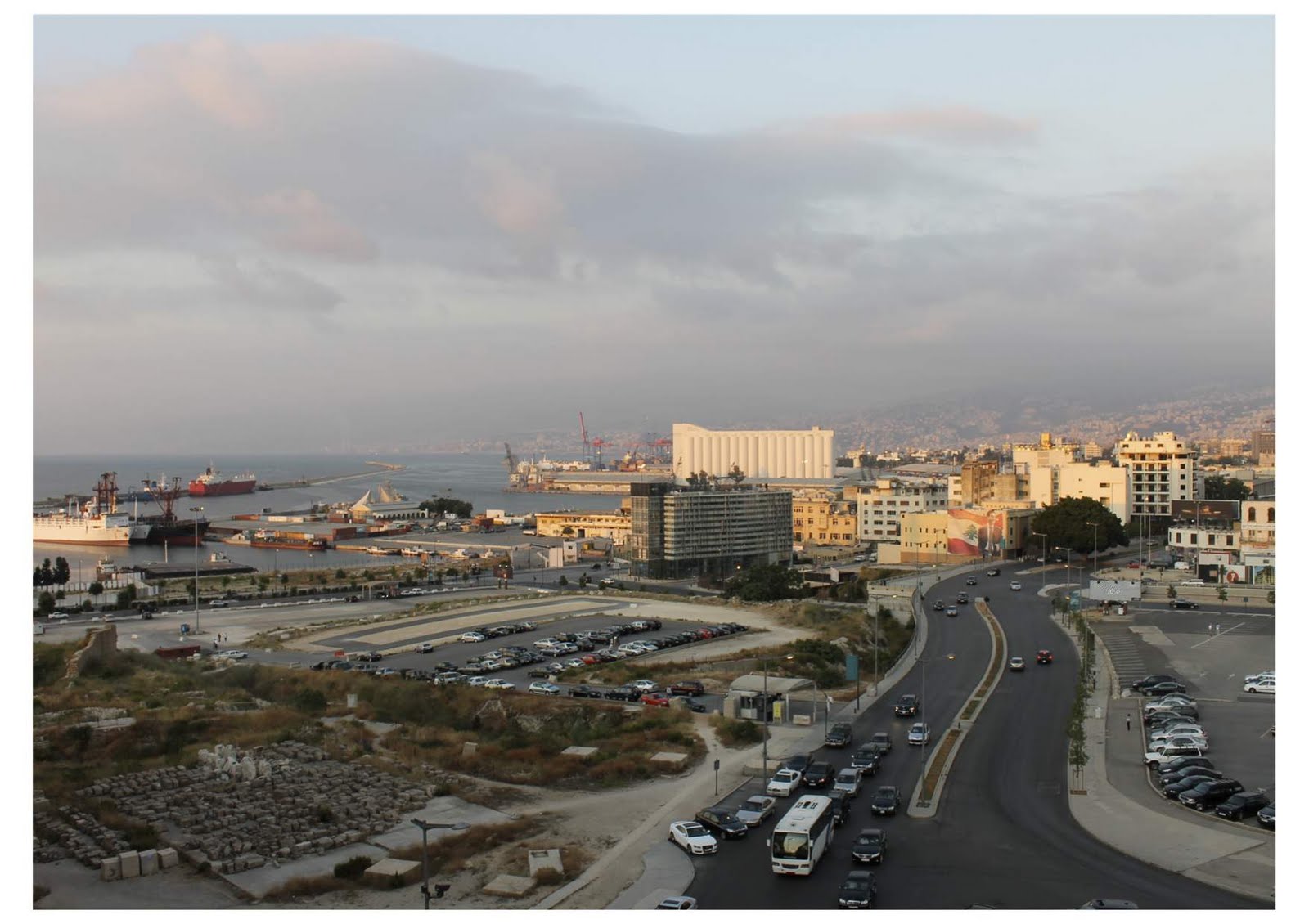
I remember my delight when I was a child walking the corniche with my father with the Kaa'k vendors and the sea nearby. But the seaview is now blocked by private buildings and businesses. For the following days we explored Beirut mostly walking, we went to Hamra, Gemmayzeh, Achrafieh, AUB, Sanayeh gardens, etc... Walking Beirut's streets was difficult. There is no place in this city for pedestrians. Naively, I expected to see a city that would have recovered from the civil war. To my surprise, the reconstruction effort for which Rafiq Hariri is so often credited is confined to part of the city, the new business district and the one that consolidated the Hariri financial empire while the rest of the city still has to recover from the 1975-1990 civil war. Around the solidere area, there are many building projects for more high end luxury apartments and shopping malls (the latter term has now entered the Lebanese dialect), one of which, near the Saraya, is designed by no other than famous French architect Jean Nouvel. I wondered how many Lebanese can buy these apartments and shop in these luxury malls?
Beirut's 'reconstruction' at the hands of Hariri was and still a high profile looting operation that has dispossessed Beirutis from their city. One taxi driver told me that his father had a shop in the old Beirut souk that he sold unwillingly to Rafiq Hariri for 5000 dollars which is the actual average price for one meter square in the area. Hariri took Beirut by surprise at the end of the civil war when most Lebanese were still vulnerable and transformed part of it into something else, not only did he work swiftly in total disregard to Beirut's rich archeological past and to the dismay of archeologists, but he transformed Beirut into something that most Lebanese do not recognise as their city, a heaven for the super rich, Gulf countries type, where they can feel at home. There are still many traditional old houses in Beirut but most of them are in ruins. We wanted to take a picture of an old house near Sanayeh garden and a man nearby prevented us from doing so. He told us that the owner does not want people taking pictures of his house.

People are tense. The cost of living is high. Real estate prices are high. And there are no satisfactory essential public services from education to health care. Health care is exapnsive. Even doctors working at private clinics are poorly paid and it is the clinics owners who make the money. Lebanon is trying to postion itself on the market of medical tourism.
There is no urban planning in Beirut. Beirut is the only city that, after a nearly total destruction by the war, did not bother with urban planning. There are architecturally disastrous real estate developments all across the city, not only in the Solidere area. I was told that Gemmayzeh residents, a conservationnist neighbourhood in Beirut, fought and still fight against savage building developments.
We also drove through south Beirut where the effects of the 2006 destruction by Israel are invisible because the reconstruction effort in this area was led by Hezbollah. One can still feel the effects of the 1975 civil war in most of Beirut areas except the 2006 heavily bombarded south Beirut.
Cars and transportation. Hiring a car proved to be a difficult and treacherous transaction. I booked through internet with an international company. On site, I was given an old car, it read 50000 Kms but felt older on the Chouf area roads and when I called to complain I was told that the economic situation has been so difficult the last two years that they haven't been buying new cars. I gave the car back and rented from another company operating outside Beirut. Despite high gaz prices with a full tank costing between 20% and 10% of the average monthly salary, Lebanese love their cars. They don't walk anymore. There is no public transport but private collective taxis (6 seats and more) operate in the city, between Lebanon's main cities, and between cities and even remote villages, often every half an hour.
There is no concrete presence of the state in everyday's life. Even in the newly publicised nature conservation areas like the Cedar reserves and the Lebanon Mountain trail, minimal financial means and measures are absent. Lebanon is an example of the catastrophic effects of neoliberal policies in countries where central governments are weak and civil society is non existent. However, one thing is sure, there is an awareness, among the general public, that this catastrophe was brought upon them by Rafiq Hariri. There is little love for him and his son among the general public and across all sects right now in Lebanon.
The STL (Hariri tribunal) and the indictment. Only Brammertz pursued the business motivated trail in the assassination of Rafiq Hariri. There is a big red 'Stop Solidere' sign posted on the walls of the St Georges hotel right now in Beirut near the site where the bomb detonated. The site of the assassination is symbolic enough. It is thought that initially the hypothesis of an underground bomb was advanced in order to lure investigators to the trail of a political assassination. It was known later that the bomb was a roadside bomb and we now know that IED are now the weapons of the poor. So Hariri could have been assassinated by anybody.
There is resentment among Lebanese citizen about what Hariri had done to them and to their city. Only few were able to resist Hariri's offers when he decided to buy the whole center town area and Lebanese realised very late how quick Hariri was at transforming their architectural heritage. The egg building stands, like the last Celtic village resisting the Romans in 'Asterix', as a testimony to the scars of war and to Lebanese awakening about their heritage just few meters from Hariri's final rest place and from the new carefully polished downtown Beirut, for how long? Ordinary citizen, who had their shops and their livelihood in the area, financially and psychologically broken by years of civil war, had to sell because Hariri had an offer for them they could not refuse. I think what happened here is a vivid illustration fo the shock doctrine. I was in Beirut when the indictment was issued and it was a non event. Lebanese, from all sects, have come to realise what Hariri did to their country and there is little love for him right now in Lebanon where the economic situation is difficult. The Al Jadid TV interviewed people just after the indictment was issued asking if they were ready to go to the streets to demand justice for Hariri and even among the people who were visiting his grave the answer was 'no'. And during my stay in Beirut, I crossed the martyr square area daily and never saw more than one or two people at the grave, most of the time there were none.
After few days spent in Beirut, I was finally relieved to head for the north where my time was going to be split between tourism, family meetings, and walks in my father's land.
Article and pictures about the egg building.
To better understand the short history of the post civil war years in Lebanon, here is a must read article from blogger Loubnan Ya Loubnan (in French): Au Liban, une mafiocratie contre son peuple.
This post will be continued...
15.4.11
Hariri in Wikileaks: ''The Syrian Muslim Brotherhood supports peace with Israel''
Here, Saad Hariri, who is trying to convince the US to get rid of Bashar El Assad by replacing his rule with a sunni Muslim brotherhood rule, paints a rosy picture of the worst brotherhood in the history of the ME (after Saudi Arabia):
They would accept a woman as a president in Syria
They would accept civil government
They would accept a christian as a president of Syria
They would support peace with Israel
YNET NEWS (as of today): Saudi Arabia is a natural ally to Israel.
They would accept a woman as a president in Syria
They would accept civil government
They would accept a christian as a president of Syria
They would support peace with Israel
YNET NEWS (as of today): Saudi Arabia is a natural ally to Israel.
30.4.09
12.9.08
Jumblatt breaking with pro-US coalition ?
Walid Jumblatt, the colorful and outspoken leader of Lebanon's Druze community, accused his coalition's leader, Saad Hariri, of trying to build a militia and allying with Islamic extremists. In comments to a newspaper, he lampooned Hariri's leadership skills, likening his U.S.-backed Future Movement to a "troop of camels all walking together."
Link found on Angry Arab.
Read also on Druze unity manifested at the pro-syrian Aridi funeral who was killed by a car bomb.
13.8.07
In The Name Of The Father
A Portrait of Saad Hariri and his father, and of Lebanon's recent history.
In Condé Nast, By Kevin Gray.
But there is also a shrewd political calculation behind Saad’s outbursts. As the power broker for all Sunnis in Lebanon, Saad must make sure Shiites don’t infringe on his base’s interests.So when Hezbollah pinned Siniora behind barbed wire, it was understood as a threat to Sunni power, not just to the government. Saad made sure Sunnis rose up in their strongholds at Sidon and Tripoli, staging massive rallies that were broadcast on his Future TV.
Saad has been willing to play that sectarian card in a way his allies consider risky. He has been accused of funding Al Qaeda-inspired Sunni jihadists in Lebanon. A close adviser told me that doing so was a necessary evil. But less than 24 hours after the adviser’s admission, in early May, one such group attacked the army. Saad’s Western patrons say they’re worried about such ties. “We’re not particularly comfortable with some of his relationships,” a Western official tells me just days before the fighting breaks out. But the U.S. is also playing a similar game in the region, backing Sunni militants as a way to counter Iran. After all, the U.S. may very much like—and need—Saad’s combative friends.
According to the article, Sanyura is a kind of prince consort for March 14th who were, ever since Hariri father died, grooming his son to become the prime minister of Lebanon. If that's true, I forsee a very dark future for Lebanon made of sectarian strife and a latent civil war...Saad will never be a statesman. He will be a good puppet for Saudi Arabia (and by extension presently for the US and France) where he grew up, where he holds a citizenship, and where he nurtures a family and business and political ties.
Read the whole article
Another interesting read
Solidere: Vigilantism under color of law. Or the story of the intimate intricacies between political and business interests of the Hariris and their company, Solidere, meant to 'build' Lebanon after the civil war.
In Condé Nast, By Kevin Gray.
But there is also a shrewd political calculation behind Saad’s outbursts. As the power broker for all Sunnis in Lebanon, Saad must make sure Shiites don’t infringe on his base’s interests.So when Hezbollah pinned Siniora behind barbed wire, it was understood as a threat to Sunni power, not just to the government. Saad made sure Sunnis rose up in their strongholds at Sidon and Tripoli, staging massive rallies that were broadcast on his Future TV.
Saad has been willing to play that sectarian card in a way his allies consider risky. He has been accused of funding Al Qaeda-inspired Sunni jihadists in Lebanon. A close adviser told me that doing so was a necessary evil. But less than 24 hours after the adviser’s admission, in early May, one such group attacked the army. Saad’s Western patrons say they’re worried about such ties. “We’re not particularly comfortable with some of his relationships,” a Western official tells me just days before the fighting breaks out. But the U.S. is also playing a similar game in the region, backing Sunni militants as a way to counter Iran. After all, the U.S. may very much like—and need—Saad’s combative friends.
According to the article, Sanyura is a kind of prince consort for March 14th who were, ever since Hariri father died, grooming his son to become the prime minister of Lebanon. If that's true, I forsee a very dark future for Lebanon made of sectarian strife and a latent civil war...Saad will never be a statesman. He will be a good puppet for Saudi Arabia (and by extension presently for the US and France) where he grew up, where he holds a citizenship, and where he nurtures a family and business and political ties.
Read the whole article
Another interesting read
Solidere: Vigilantism under color of law. Or the story of the intimate intricacies between political and business interests of the Hariris and their company, Solidere, meant to 'build' Lebanon after the civil war.
Subscribe to:
Posts (Atom)
 Since March 29th 2006