Showing posts with label Lebanon. Show all posts

3.12.11

Michael Young in Ottawa: Mixing narratives on Lebanon and the 'Arab Spring'


Summary from video:


Lebanon in 2005 wasn’t probably spark for the Arab spring but there are ingredients that are the same from what we are seeing in other Arab countries now and before 2011.

What happened in 2005?  Iraqi elections, Lebanon’s Beirut Spring.  No one mentions now these two events when speaking about Arab Spring.  But many of the features of these two events are present in the Arab Spring.
In 2005, ten and hundred thousands occupy Martyr Square demanding the withdrawal of Syrian troops from Lebanon, the resignation of the government and the security apparatus. Syria was a key actor in the assassination of Rafik Hariri.

Syrians pulled out of Lebanon after 29 years of continuous presence.  Lebanon earned this.  It wasn’t a revolution, it was an emancipatory movement.

Those who went to Martyr Square represented all walks of Lebanese society except the Shias.

In investigating this moment Young finds in it 4 major salient issues:

1.     Use of public space
2.     Demand for overhaul of instruments of repression
3.     Role of foreign intervention
4.     Aftermath

These 4 salient issues can be found in current Arab revolutions.

1.     Use of public space: The need to secure a public space with symbolic and geographic relevance, under the eyes of media.  In the case of Lebanon, Martyr Square was an easy location, green line, place of reconciliation and the place where Hariri was buried.  It is next to the old city that Hariri built and to An-Nahar newspaper building.  The public will come to visit the tomb of Hariri.  The security cannot prevent them from doing so.  They assemble after the visit and the place becomes difficult to clear, under the watch of the media.  There was a replication of this in Arab revolutions: Tahrir, Pearl roundabout, different and rival squares in Yemen, a whole city in Libya, Benghazi, where a rival government was established.  In Syria revolts proliferated in many cities but took hold in Hama, Homs and Kurdish area.  Public space occupation becomes a tent city and who occupies a tent city?  Young people.  Idealistic, convinced of their position.  It is in this context that frustration is high.

2.     Instruments of repression:  In 2005, senior security chiefs were removed by the government under popular pressure. It doesn’t happen often that security personnel leave office under pressure from street.  When Jamil el Sayyed  was removed, Young called Qasir to congratulate him because of his editorials against the security apparatus but Qassir was assassinated 15 days later and Young is convinced that the two events are connected, the removal of El-Sayyed and the death of Qassir.

Security apparatuses are difficult to change or remove.   Lebanese protesters in 2005 played the differences and the competition between different tools of repression, security apparatus and army, playing on the nationalism of the Lebanese army who avoided attacking protesters.  The army also was playing it both ways, implementing order but not firing on crowd.   The value of any revolution in the aftermath is by the severity order is imposed.
In Egypt and Tunisia the army didn’t fire on the crowd. 

In Libya, it is the balance of power between two armies that was responsible for order.  No accountable security force in Libya, same in Syria, it is the balance of power.

3.     Foreign intervention (outside intervention).  Lebanon didn’t get its due in 2005.  Chirac was for foreign intervention but Bush came late to it.  The trend in the Arab world was against foreign intervention, not against Hezbollah and Syria.  Lebanon's revolution was seen as Bourgeois revolt (Prada revolution).  Those who could protest were relatively rich and educated.  Liberals in the west were more pro-March 8 because they felt the movement was more popular.  In the Arab world today, foreign intervention is being accepted in Libya, in Syria.  Now it’s OK.  It is not what it used to be for Iraq and Lebanon back in 2005, there is no more opposition in the Arab world to foreign intervention.    We shouldn’t underestimate the role narratives play in the acceptance of foreign intervention.  In the narrative, you have to make people (natives) part of the foreign intervention, mix narratives, and inside one meant for the outside, hence the importance of placards in English, and an outside one meant for the  inside.  Make people on both sides want to be part of it.  In Lebanon narratives played an important role.  Here Young mentions the ad agency role in Lebanon's revolution.  Symbolism and colours created a narrative that was both mobilising on the inside and easy for western audience to understand what was going on.  

Lebanese understood how the west wanted them to be!

There is symbolism in Tahrir, in Benghazi.

One thing that became important in Lebanon is the STL functioning under a Canadian prosecutor.  It is the first time the UN investigates in other countries and it will be replicated.  Young said he was disappointed with the STL, accused Brammertz who he called the second prosecutor of derailing the investigation, but says that there might still be possibilities for other indictments, Syria.

4.     Aftermath.  In Lebanon: parliamentary elections, political acrimony, 2006 Hezbollah-Israel war, domestic conflict leading to almost armed conflict.

The aftermath tend to shape the perception of the revolution.  It is a mistake to interpret things with such an absolutism and only from the point of view of the aftermath.  The outcome shouldn’t delegitimize the initial impulse if it fails.   Such delegitimisations go like this: ‘if Islamists win, then revolution is undemocratic’  This is currently the problem at the center of Arab revolts. It is a shame to adopt these interpretations because they fall into Arab dictators argument ‘either them or us’.  ‘I am not religious, but Islamists are legitimate, they’re 60% in Tunisia’.  We shouldn’t assume that if Islamists do well then the initial revolt failed.  Instruments of repression are important in the aftermath.  The aftermath won’t be like the Canadian system but at least could have some accountability.  The accountability of the instruments of repression is a question that the west has to ask (and answer?)

Conclusion of the talk:  there is a recurring pattern between 2005 and 2011.  2011 is the second impulse.  We can find some authenticity in this recurring pattern.  Lebanon in 2005 is as authentic as Iraq in 2005 as Tahrir in 2011.
Authenticity bestowed from outside, the tag of inauthenticity for Lebanon in 2005 was made by Arab world.

There are 20' questions at the end of the video.  Questions and answers are interesting.

16.10.11

Lebanon: A Tale of Two Governments and Two Visits (part III)

Part I and Part II

We divided our overnight stay in the north between a B&B in a small village high in the mountains surrounding the Qadisha (holy) valley and a hotel in Ehden.  The latter, perched at around 1800 meters above sea levels around the same valley, is the summer residence of former president Suleiman Frangie and current Marada movement leader MP Suleiman Frangie jr and an Aoun and Hezbollah political ally.  Opposite Frangie's den, and only few kilometers away, is Gea'gea's village Bsharre.  Samir Gea'gea' is the chief of the Lebanese Forces militia who fought in the civil war and is suspected of having played the main role in the slaying of the actual Marada movement leader's parents Tony Frangie, his wife and his daughter.  He was pardoned in 2005 by the new Lebanese parliament for other crimes and got out of prison to become an MP for Bsharre. Another Qadisha village, Diman, is also in the surroundings, is the summer residence of the Maronite Patriarchate.


The Qadisha valley is known for having contionuously hosted Maronite hermits and other Christian hermits since the 13th century, according to records, but probably before because there were hermits in the Maronite religion as soon as the 5th century.   Its mountains are interspersed with villages that reach for the sky.  Lebanon's mountainous regions have vibrant rural communities.  The Qadisha valley is at the heart of the Maronite religion history and yet, around it, the civil war has left the memory of dramatic events and deep divisions that run in the Maronite community until today.  There is a beautiful description with pictures of the valley on this blog.


During our stay we made frequent visits to my native village. 

On our first visit to my village, my cousin promised me that for every meal we eat with them he was going to accompany us on a tour of the land.  The land is outside the village and although I am acquainted with it, I couldn't remember its limits.  And for three consecutive days, we would arrive around 10 a.m. to the village, spend the morning visiting relatives, eat lunch with my cousin around 1 p.m. and head to the fields between 4 and 6 p.m.  

The village has expanded.  Nobody really leaves the village, even though they work outside, villagers keep houses in the village and so do their grown-up and married children.  Part of the agricultural land has been invaded by houses and I discovered the price went significantly up from what my father told us, partly because of housing expansion, partly because the dramatic increase in prices in Beirut is having a snowball effect on the rest of the country, and also because many wealthy Christians are fleeing Iraq and other Arab countries and settling in Lebanon, so much so that the Lebanese government had to set a limit on how much land and property a foreigner can buy. 

We visited the house where we were born my brothers and I.  It is uninhabitable right now, it has been empty for more than 20 years.  I arranged for an architect to visit and we are working right now on plans for renovations.  It was quite emotional to visit my parent's house.  There were some pictures and books covered in dust.  I rescued some of them.  I remember that at the start of the civil war my father, afraid that Christian Phalangist militia, who were executing their political enemies in the village, would find socialist litterature in our house, made me burn some books.  I remember my rage and my sadness but I also understood that my father was trying to protect us.  I promised myself that we would bring the house back to life.  Only thing left was to convince my brothers.

Outside our village visits, always warmly welcomed and eagerly expected, we toured the Qadisha valley, its mountains, villages, trails, fields and monasteries.  We also trekked the LMT in the area.  There  are beautiful Cedar reserves around Tannourine, Bsharre and Ehden, and we visited some of them.


One of the most beautiful monasteries is Saint Antoine of Qoshaya.  It hosts the first typographic printing machine of the ME on which the first Arabic bible was printed. 


We also went to the beach in the north.  One day we hired a fisherman boat to Rabbits' island near Mina, Tripoli (Lebanon's northern city).  The island has some insignificant ruins from the time of the crusaders and became a training ground for Palestinian factions before and during part of the civil war.  It is now a natural reserve.  

Tripoli is a very poor city and poor children were lining the Rachid Karame street begging drivers for money on red light stops.  It is also a recruiting ground for Hariri militia.  Another day on the beach was spent in Byblos. There was a big family reunion in Byblos.  My husband's niece, who was studying Arabic in Damascus, came for the day all the way from Damascus to see us. 

In the north, mostly Christian, very few were supporters of the western Saudi leaning March 14th movement led by Mr. Saad Hariri and his Christian ally Ge'gea'.  Despite the difficult situation in neighbouring Syria, and probably because of it, most Chritsians were apprehensive and wary of any western political influence and most Lebanese Christians in the north supported the Hezbollah-Aoun led coalition that was in the process of forming the next government.  Dennis Kucinich understood it better when, appearing on New TV (Lebanon) after a visit to Bashar El Assad in Damascus, one July morning, he said to the interviewer that after meeting El Assad for about three hours he was convinced that foreign intervention won't resolve tensions in Syria and that the best solution is dialogue.  The new Lebanese Patriarch, Al Ra'i, who took it upon himself to tour Maronite communities everywhere in Lebanon during this summer, visited my village on the day we left the country.  We saw the preparations and we were told that he will be met with orange scarves (orange is the color of the political movement of Hezbollah's Maronite ally Michel Aoun).  Al Ra'i got the message of the majority of Christians in Lebanon, they don't count on the West anymore.  It is no surpirse then to see his most recent statements about Syria and the necessary support for the resistance in Lebanon.

One thing is certain, Lebanese want to move forward, they don't want to make wars.  Past governments since Taef  applied neoliberal economic policies which saw Lebanese savings evaporate.  Lebanese used to be savers and not borrowers.  It isn't the case anymore.  The country is in a very difficult economic situation.  On our way to the airport, the taxi driver described to us how he lives.  He has a family of four.  He earns around 3000 dollars a month.  As real estate is high and exceeds budget he decided to live outside the city, but then gaz prices are high.  Good schools and good health are private.  By the end of the first week of every month, he has already spent most of his salary, mainly on reiumbursing borrowed money.  He goes to the bank, borrows again and waits for the next month.  Driving tourists is an additional income for him and he works as intermediary in real estate deals.  He told us that Lebanese don't possess their country anymore, they don't possess themselves.  He was hoping the new government would do something but was skeptical.  He was an angry man.  Most people who live on fixed income in Lebanon are like him.  

During our stay in Lebanon we watched on TV the debates in parliament around the confidence vote for the new Mikati government.  The debate was at times very acrimonious.  This is the first non-Hariri, non neoliberal, pro-people government since the 90s.  I had come to Lebanon in a first visit in Januray for my father's funerals with some anxiety over what might happen after the fall of the Hariri government and finished my second visit in July after a new government from a new coalition was formed.  Lebanon was in a post Hariri mood and it was hoping for some positive change.


24.8.11

Special Tribunal for Lebanon: A Prosecutor's "Tunnel Vision"

Al Akhbar English, strong aletrnative to non Qatari non Saudi media, is out.

This is a link to the latest article on the Special UN Tribunal for Lebanon (STL) from Omar Nashabe.


The STL is the first international tribunal to indict someone for a terrorism crime. Instead of targeting suspects affiliated to internationally recognized terrorist organizations such as al-Qaeda, the first terrorism indictment is aimed at Hezbollah, a Lebanese resistance movement. This does not come as a surprise for those who monitor events in the Middle East. Hezbollah represents a threat to the security of Israel, something unacceptable to the United States and other Western powers. The investigation into the assassination of Hariri may have been a golden opportunity to undermine Hezbollah.

10.8.11

Lebanon: A Tale of Two Governments And Two Visits (part II)

Part I

My father had died last January leaving each one of us, me and my brothers, few parcels of his land in the north. I was in Lebanon for his funerals back then and I came back this summer, this time with my family, to visit his land.

My father worked hard to acquire and maintain his land. He inherited some of it and bought the rest. He had a spiritual connection to his land. Before the Lebanese civil war he was unemployed for two consecutive years and the land saved us. With the usual olive harvest, he planted tobacco and was able to pay for our private school and maintain our living standards. During the civil war, he became unemployed again and we lived from the land. Even though we were children, we learned to acknowledge the material security the land afforded us.  In Lebanon's rural communities, the house and the land are what define persons first, no matter how much this person earns and no matter what her social position is. My father was proud of his land and he made us participate in the olive harvest every year. During the civil war he refused to sell and leave the village and Lebanon alltogether. He stayed in the village during its darkest hours while we were in safety away from him. He later sent my brothers abroad for fear of indoctrination by the militia. Even though we all ended up living and working outside Lebanon, we kept the land and the house, my father taught us to love the land.

I have vivid memories of my father's land. I remember accompanying him to the tobacco field and marveling at the sight of the morning dew hanging on the furry tobacco leaves. I remember the olive harvest, the delicious meals eaten under the olive trees, the itinerant seller of sweets wandering from one field to another and announcing his arrival with a bell and chansonnettes. I remember the donkeys carrying olive bags and children at the end of the day, the family meal of the evening with the Syrian workers who used to help in the harvest. I remember my father working late into the night after dinner to separate the olives from their leaves and the sight of olives rolling on a board to achieve this process. I remember the end of the harvest season, the goodbyes, and the sadness that settled afterward with the coming of the cold season, a sadness that would go only at easter time when the flowers came back to their trees promising another harvest. All these images were rolling in my head while we were driving from Beyrouth to the north this July.

It took some time to leave Beirut. The traffic was heavy and we were told that this was nothing. 'Wait until the gulfies show up'. Beirut was waiting for tourists from the gulf and unsure whether they were going to show up. And we learned that they did show up after all. Because of the traffic inside and around Beyrouth, the city keeps well its visitors. During our one week stay there we hardly left the city, only once for the Chouf area and another time for Kesrouane. Leaving Beirut for good this time was liberating.

The day we left Beirut, there were news that the long anticipated indictments of Hezbollah members were issued by the STL. These news appeared barely two days after rumours that the Hezbollah approved Mikati government had reached an agreement on its position of principle on the STL, and that the newly formed government was going for a confidence vote in the parliament. This positive denouement for the Mikati government was not anticipated by Hezbollah's political rivals, Hariri and March 14th. Nor did they anticipate before that Lebanon would find a Sunni politician to form a government, after the ousting of Hariri, and that Mikati would be able to form a government. The only thing March 14th and hariri could count on to cloud the political climate for their opponents were the STl indictments and here they came, divinely timely to throw suspicion at Hezbollah. However, the reality among Lebanese, relatives and non relatives, from all political backgrounds, would unravel in a different way. Nobody among Lebanese we encountered during our subsequent two weeks stay would care about the STL. The indictements, along with other measures taken by the US to criminalise Hezbollah and its members, are not affecting Hezbollah's standing in Lebanon. But then they are maybe targeting the wider Arab public opinion. This is the most relevant context within which to interpret the current campaign to criminalise Hezbollah as the battle is ongoing to control the Arab spring and transform it into a cold Sunni-Shia war.

On our way to north Lebanon, we stopped at my aunt in Kesrouane. Lebanese customs obligent, the conversation veered toward politics very quickly. My aunt and her grown up children are all for the general (Aoun). Past governments mismanaged the country, made Lebanese poor, bought Beirut downtown on the cheap, sold it to gulf money, estranged Lebanese from their city downtown by making it look like any gulf rich city center. They used the shock doctrine to implement neoliberal policies that wrecked Lebanese traditional subsistance economy and way of life. Before my two visits this year to Lebanon, the last time I was there was in 2005. And I could see that the economic situation of the people and their way of life have greatly deteriorated. Lebanon is far from being self sufficient for its energy needs. Every household pays for the electricity twice, once for the state owned electricity company and once for a private provider. The state provides barely 12 hours of electricity per day. Add to that the soaring price of gaz and you have Lebanese with good jobs scrambling to make ends meet.  Only the super rich are not affected. Talking to my aunt, I realise how much Aoun's populist discourse has touched nerve among Lebanese. My aunt's household is an integrated economy, all inhabit the same building that they own, each one has a floor in the building and share everything from meals to transport to maids...They are four adults working good jobs to make ends meet, for a family of seven in total.

My parents' house in the village, a traditional white stone house, needs extensive renovations. We had booked two locations in the Qadisha valley for our two weeks stay in the north. During this time we were going to shuttle between the village and the two locations, visit the beautiful Qadisha valley, maybe Tripoli if all is well, Byblos, and walk the cedar reserves as well as small sections of the LMT, especially the ones that follow the old trails used to connect people and animals between the mountain villages of the north.

During my stay in the north I watched parts of the parliament sessions preceding the vote of confidence and an interesting interview with Dennis Kucinich on Al Jadeed TV after he had a three hours meeting with Syria's Assad.

Part III and final to follow...

13.7.11

Lebanon: A Tale Of Two Governments And Two Visits (part 1)


I was recently in Lebanon on a vacation with my family. The internet is so slow there that for those who are used to high speed like me it feels like there is no internet. I could barely check my email. While my visits to my native country are usually rare, this visit was my second this year. I have been in Lebanon just six months ago, alone, for my father's funerals. My first visit coincided with the fall of the Hariri government and my second visit ended with the first indictments issued by the STL and the confidence vote for the new Mikati government. One might think that the political landscape between the two visits might have radically changed but, to my surprise, the people I know and met during the two visits are the same and the country is the same: high unemployment, inflation, poor electricity and internet service, and social discontent with the former majority across the sectarian divide. Except for Tripoli and Akkar's poor (see UNDP report pages, 10,11, and 18) who are exploited by Hariri and paid only episodically for sectarian agitation, ordinary Lebanese are preoccupied by daily survival rather than sectarian politics.

Cellphone service. The cellphone I bought experienced some interruptions and was without help in remote areas of Lebanon. I bought my sim card in Beirut. It was from MTC Lebanon which is understood to be an affiliate of Saudi Telecommunication Company (STC). I immediately phoned relatives to give them my local cellphone number and was met with disbelief at the number. Two or three persons even called me just after writing down the number just to check that the number was right. This is because my number started with 76 and they couldn't understand how MTC numbers jumped from 71 to 76 in such a short time. There are no MTC numbers starting with 72,73,74,75 operating in the country I was told and the number 76 was fairly recent. My guess is that the missing numbers all went to Syria to document the Syrian revolution 2011.

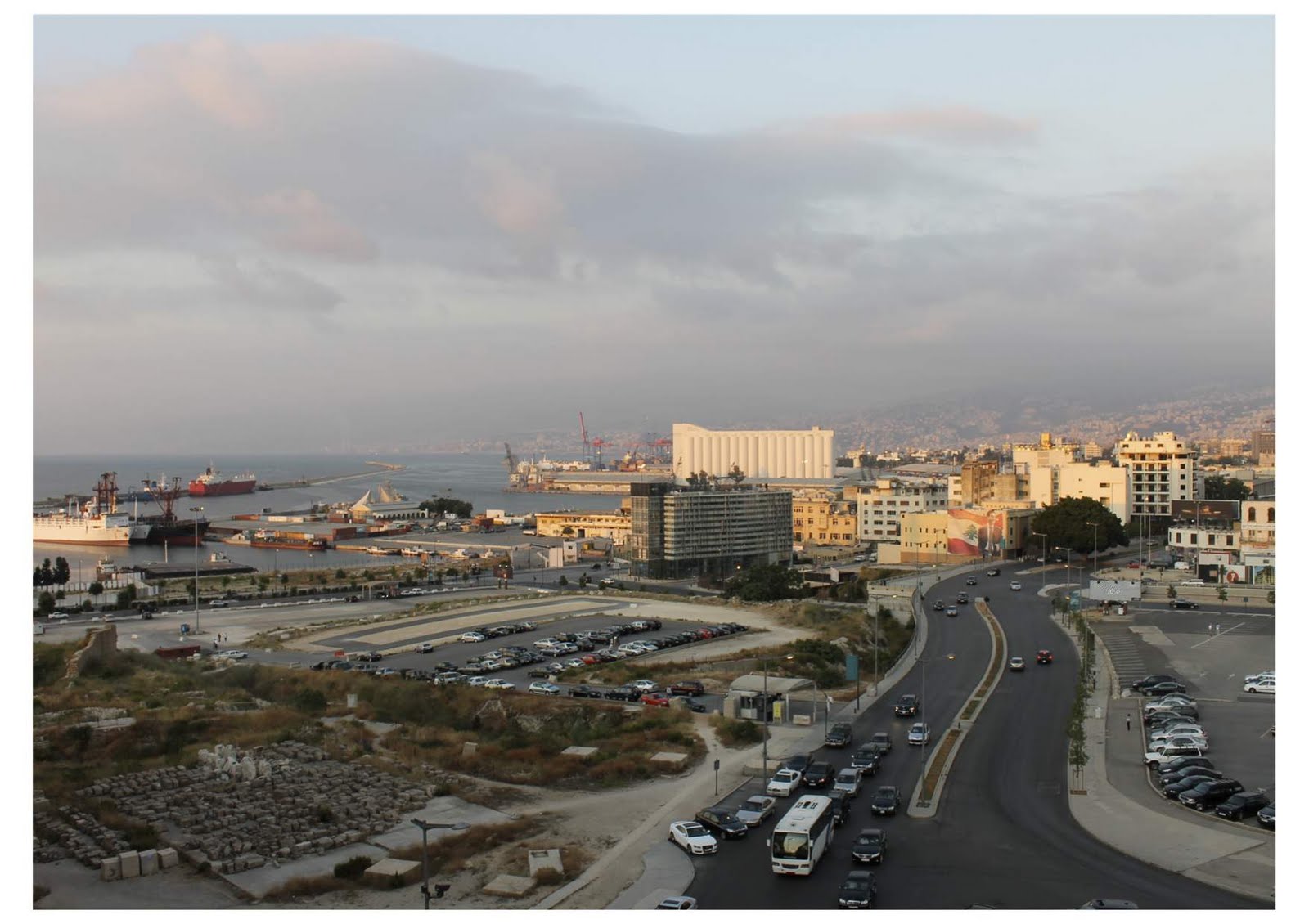
The state of Beirut and the state of Lebanon.  During my previous visits, I had barely toured Beirut. I can honestly say that I didn't really get to see Beirut after the end of the civil war except for one day spent around the Solidere area that was reconstructed by Hariri and the national museum in 2005 after the assassination of Rafiq Hariri. I have family in the north and I usually stay there when I visit Lebanon. This time we decided to explore the new Beirut before going north. I was in for a surprise. The corniche from Martyr square to Raouche is now mainly blocked by buildings, private beaches, real estate developments. We took upon us to walk the entire distance between Martyr square and Raouche but had to abandon the project near the lighthouse (manara) because we barely saw the sea while having to deal with narrow sidewalks that gave way most of the time to parked cars pushing us toward the heavy traffic under a blazing sun.


I remember my delight when I was a child walking the corniche with my father with the Kaa'k vendors and the sea nearby. But the seaview is now blocked by private buildings and businesses. For the following days we explored Beirut mostly walking, we went to Hamra, Gemmayzeh, Achrafieh, AUB, Sanayeh gardens, etc... Walking Beirut's streets was difficult. There is no place in this city for pedestrians. Naively, I expected to see a city that would have recovered from the civil war. To my surprise, the reconstruction effort for which Rafiq Hariri is so often credited is confined to part of the city, the new business district and the one that consolidated the Hariri financial empire while the rest of the city still has to recover from the 1975-1990 civil war. Around the solidere area, there are many building projects for more high end luxury apartments and shopping malls (the latter term has now entered the Lebanese dialect), one of which, near the Saraya, is designed by no other than famous French architect Jean Nouvel. I wondered how many Lebanese can buy these apartments and shop in these luxury malls?

Beirut's 'reconstruction' at the hands of Hariri was and still a high profile looting operation that has dispossessed Beirutis from their city. One taxi driver told me that his father had a shop in the old Beirut souk that he sold unwillingly to Rafiq Hariri for 5000 dollars which is the actual average price for one meter square in the area. Hariri took Beirut by surprise at the end of the civil war when most Lebanese were still vulnerable and transformed part of it into something else, not only did he work swiftly in total disregard to Beirut's rich archeological past and to the dismay of archeologists, but he transformed Beirut into something that most Lebanese do not recognise as their city, a heaven for the super rich, Gulf countries type, where they can feel at home. There are still many traditional old houses in Beirut but most of them are in ruins. We wanted to take a picture of an old house near Sanayeh garden and a man nearby prevented us from doing so. He told us that the owner does not want people taking pictures of his house.


People are tense. The cost of living is high. Real estate prices are high. And there are no satisfactory essential public services from education to health care. Health care is exapnsive. Even doctors working at private clinics are poorly paid and it is the clinics owners who make the money. Lebanon is trying to postion itself on the market of medical tourism.

There is no urban planning in Beirut. Beirut is the only city that, after a nearly total destruction by the war, did not bother with urban planning. There are architecturally disastrous real estate developments all across the city, not only in the Solidere area. I was told that Gemmayzeh residents, a conservationnist neighbourhood in Beirut, fought and still fight against savage building developments.

We also drove through south Beirut where the effects of the 2006 destruction by Israel are invisible because the reconstruction effort in this area was led by Hezbollah. One can still feel the effects of the 1975 civil war in most of Beirut areas except the 2006 heavily bombarded south Beirut.

Cars and transportation.   Hiring a car proved to be a difficult and treacherous transaction. I booked through internet with an international company. On site, I was given an old car, it read 50000 Kms but felt older on the Chouf area roads and when I called to complain I was told that the economic situation has been so difficult the last two years that they haven't been buying new cars. I gave the car back and rented from another company operating outside Beirut. Despite high gaz prices with a full tank costing between 20% and 10% of the average monthly salary, Lebanese love their cars. They don't walk anymore. There is no public transport but private collective taxis (6 seats and more) operate in the city, between Lebanon's main cities, and between cities and even remote villages, often every half an hour.

There is no concrete presence of the state in everyday's life. Even in the newly publicised nature conservation areas like the Cedar reserves and the Lebanon Mountain trail, minimal financial means and measures are absent. Lebanon is an example of the catastrophic effects of neoliberal policies in countries where central governments are weak and civil society is non existent. However, one thing is sure, there is an awareness, among the general public, that this catastrophe was brought upon them by Rafiq Hariri. There is little love for him and his son among the general public and across all sects right now in Lebanon.


The STL (Hariri tribunal) and the indictment.  Only Brammertz pursued the business motivated trail in the assassination of Rafiq Hariri. There is a big red 'Stop Solidere' sign posted on the walls of the St Georges hotel right now in Beirut near the site where the bomb detonated. The site of the assassination is symbolic enough.  It is thought that initially the hypothesis of an underground bomb was advanced in order to lure investigators to the trail of a political assassination.  It was known later that the bomb was a roadside bomb and we now know that IED are now the weapons of the poor.  So Hariri could have been assassinated by anybody. 

There is resentment among Lebanese citizen about what Hariri had done to them and to their city. Only few were able to resist Hariri's offers when he decided to buy the whole center town area and Lebanese realised very late how quick Hariri was at transforming their architectural heritage. The egg building stands, like the last Celtic village resisting the Romans in 'Asterix', as a testimony to the scars of war and to Lebanese awakening about their heritage just few meters from Hariri's final rest place and from the new carefully polished downtown Beirut, for how long? Ordinary citizen, who had their shops and their livelihood in the area, financially and psychologically broken by years of civil war, had to sell because Hariri had an offer for them they could not refuse. I think what happened here is a vivid illustration fo the shock doctrine. I was in Beirut when the indictment was issued and it was a non event. Lebanese, from all sects, have come to realise what Hariri did to their country and there is little love for him right now in Lebanon where the economic situation is difficult. The Al Jadid TV interviewed people just after the indictment was issued asking if they were ready to go to the streets to demand justice for Hariri and even among the people who were visiting his grave the answer was 'no'. And during my stay in Beirut, I crossed the martyr square area daily and never saw more than one or two people at the grave, most of the time there were none.

After few days spent in Beirut, I was finally relieved to head for the north where my time was going to be split between tourism, family meetings, and walks in my father's land.

Article and pictures about the egg building.

To better understand the short history of the post civil war years in Lebanon, here is a must read article from blogger Loubnan Ya Loubnan (in French): Au Liban, une mafiocratie contre son peuple.
This post will be continued...

27.6.11

Iran, Syria, Regime Change, And The Resistance Axis

This is an opinion article by Elie Shlahoub in the June 27th edition of the Lebanese daily newspaper Al Akhbar.

“The Syrian turmoil is targeting the Islamic resistance in Lebanon; and defending Damascus constitutes protection for Beirut and Tehran. This is in short, the Iranian approach to the events taking place in the Levant as “We will not allow the hand of the Sayyed of the Resistance to be broken” and at the same time “we will not allow that the spring of the Arab revolutions be pirated.” Relations with Saudi Arabia are severed and relations with Qatar are frozen. As for Ankara, it must be cautious: Syria is a red line even if this calls for bombarding the American bases in Turkey."
That is to be expected.  Iran will not allow the overthrow of Assad.  Clearly, the Syrian revolution 2011, by accepting sponsorship from Hariri, Saudi Arabia, Israel and the US, is presenting itself as a threat to Syria's long time allies.  The Syrian revlution 2011 is targeting mainly Syria's foreign policy and not so much domestic policy.  That is another feature of the Syrian revolution 2011 that is not found in the Egyptian and Tunisian revolutions which kept mostly the same foreign policy as hte old regimes they overthrew.

Much has been written and said about Turkey's role in the Syrian crisis but Iran is a powerful regional player and the guardian of the resistance axis. It will not allow any attempt at breaking this resistance axis to easily succeed.

11.6.11

Some personal thoughts on Syria


Photo credit: Voirlemonde

I have not been posting on Syria because the state of this country is a very personal thing to me.   I grew up during the Lebanese civil war.  I saw the savagery of my fellow men and women.  I saw people who used to be friends denounce and kill each other out of fear and under coercion.  Militia in Lebanon were intent at destroying each other.  Only the presence of the Syrian army prevented one ethnic sect from annihilating the other.  Many Lebanese accuse Syrians of  having participated, in their own way, with their intelligence and army, in the Lebanese civil war.  But Syria didn't start the Lebanese civil war.  It was started by Lebanese.  Syria watched and made sure no sect triumphed.  It was in Baathist and secular Syria's interest that Lebanon kept its religious mosaics.  I left Lebanon in 1982 and forgot about it, married a foreigner and threw myself in the pursuit of the ordinary life without ever thinking of even visiting Lebanon.  When in 2005 Rafic Hariri was assassinated, I told my husband and children that it was time to visit Lebanon because the country was probably going to enter a new period of unrest.  It was also time for me to face up to my repressed fears and my pain.  Memories came back.  Days and nights were spent with anxiety only at the thought of revisiting the country that I left ravaged by civil war.  To calm my fears, my husband decided to give this visit a context that will make it less stressful by including Cyprus and Syria in our itinerary before arriving to Lebanon.  We were in Cyprus when the London subway was bombed.  Greek Cypriots love Bashar El Assad as much as they hate Turks.  In Syria, despite the tensions on the Syrian Lebanese border, we were welcome.   I felt free, I felt secure.  I loved Damascus and the harmony between the communities.  All these years I was outside Lebanon and unable to think about it, it was there before my eyes.  I know this might seem an insult because many Syrians consider their government as oppressive and themselves as lacking freedom.  But Syria in 2005 reminded very much of Lebanon before the civil war, it was my country lost and found again.  Finally we went to Lebanon, and only because I visited Syria before and saw the possibility of different religions living together I was able to see Lebanon again without fear and negative feelings.  This is my personal connection to Syria.

I have not been posting on Syria on this blog because there is so much disinformation.  The revolution, in the beginning, seemed genuine to me. But also right from the beginning, there was evidence of lies and biases in Arab and western coverage of Syria. The Guardian for instance has been misrepresenting the events from day one, even though they pretended to have a reporter on site in Damascus. They had Katherine Marsh, and now they have Nidaa Hassan. For some reason, Brian Whitaker who has written well on the Middle east and the Arab world, has been openly anti Syrian regime right from the beginning of the events (Whitaker who is in charge of the middle east section at The Gaurdian wrote directly only rarely on Syria since the beginning). The big elephant in this small room of information is Al-Jazeera who has been litteraly lashing out at the Syrian regime and not only presenting unreliable information from eyewitnesses but also manipulating the information.

There is also the gay girl in damascus story and it has come to represent the level of lies and manipulations in the information on the Syrian revolution 2011 to the point that soon enough Syrian auhtorities will be accused of the disappearance of a fictional character. This is kafkaesque!

Serious analyses are lacking.  The left leaning Lebanese newspaper Al-Akhbar has published some useful articles on Syria but they are not making their way into other news oultets and they are not cited.

Here are two of them that caught my attention:


And there are facts and analyses by journalists, political analysts and political scientists which were never mentioned in the blogs and Syria news aggregators that are read by Syrians anxious to find a way out to the turmoil in their country:


The weak foundations of Arab democracies: the author puts the blame on Islam and its inability to foster a vital civil society, a necessary condition for democracy, the real one, not the one that is being crafted by the neoliberal cons for Syria and the Arab world.

Understanding Syria's unrests: the author mentions, as early as April 11th, the danger of armed gangs

A third way on Syria is possible, but nobody is listening...


Nir Rosen: Prospects for the sectarian terrain in the middle east, part 1, part 2.


The Syrian Muslim Brotherhood by Gary Gambill (an article from 2006 but of some interest to what is happening today in Syria).
The Syrian Baath by Eric Rouleau (1967, English). Sometimes, it is useful to have a look back.

The confrontation in Syria has also changed rapidly. The so called Syrian revolution 2011 has mutated into an armed insurgency against the regime. They have strong elements from the neighbouring Muslim Brotherhood and from external powers including Israel who have stakes in fomenting a civil war in Syria. External powers, especially Israel, have no interest in the emergence of a vibrant Syrian economy and Syrian society, I wonder how those Syrians who are monitoring the Syrian revolution 2011 from Washington DC, Maryland, or Sweden cannot see this, but they are blinded by their hate for Assad. There is no opposition in Syria today if one means by opposition a unified assembly of people having common goals for the country, there is only chaos powered by hate for the Assads and organised by ennemies of Syria in which a minority of Syrians are participating taking hostage some 70% of the population in Damascus and Aleppo. This is not to say that there isn't a need for genuine reforms in Syria and a transition to social justice and freedom (you will never hear the word democracy in my posts because the term, as it is promoted by Neo Liberal Cons and western powers as an excuse to invade Arab countries is now in disrepute), this is to say that the Syrian revolution 2011 is the perfect example of organised chaos, far from being a platform for reforms, social justice and individual freedoms.

One has to feel responsibility for the country and the people when trying to change the order of things. I am not seeing this in any known representative of the Syrian revolution 2011 and the people they are sending to protest are poor and desperate people. So far, this revolution is represented in the outside by people funded by external powers who are not friends of Syria and inside by disenfranchised people. There are no women, no families, no students, no businessmen, no professionals, no intellectuals in these protests. Meanwhile the traditional opposition sits silent and departs from its silence only to mention that it is up to the Shabab (youth) on the streets to assume the revolution. Only Bassam El Kadi, who is younger than your average traditional Syrian opposition figure, has been vocal and I like what he writes.  It makes me sad,  these old revolutionaries would like to think that there is a real revolutionary spirit on the streets.   There is.  But sadly, there is also a foreign funded armed insurgency which nobody knows for sure how it will end.

Today is the 'Day Of The Clans' of the Syrian opposition who is hoping to rally the clans of Syria. Just the title makes me suspicious of this opposition. If  clanism is going to be part of the new Syria then you can say goodbye to reforms with this opposition (not to mention democracy of course, even their democracy and not mine). They are only going to topple Assad by replacing him with another dictatorship, fragilise the country's ethnic mosaics, its economy,  put an end to the last secular regime in the Arab world, and open the door to a more docile Syria.  That's the price of freedom, if only they would get their freedom, and if only it will end there but it won't.  By ending secular governments in favour of sectarian and theocratic governments, the conditions are set for more tensions in the region.  I hope Syrians will find a way out of this mess and wish them well.

A road map to a peaceful solution in Syria.

16.4.11

The Syrian Muslim Brotherhood: Now and Then

Is this what Lebanese want?

Their kind of Islam has just executed an activist in Gaza who was helping Gaza fishermen since 2008.

And they have many more crimes on their conscience.

Now

Then_1: The Muslim Brotherhood according to Saad Hariri

Then_2 (please see video below on Memri TV, a zionist outlet).  Since I posted yesterday,  the video embedded code hasn't been working well, but you can still click on the link to the page just above.


The Muslim brotherhood were always agents of the kings of Arabia, allies of western powers and oppressors of Arabs. Their interests lie, not in the liberation and freedom of the people, but in subduing individual consciences to their brand of Islam, violent, intolerant, and racist.
Since the dawn of modern postcolonial history in the Arab world, the kings of Arabia were agents of colonial powers, foiling many attempts for progress and change across all Arab countries.

Faisal-Weizmann agreement

The Hussein-McMahon correspondance

See also: Al Qaida roots itself in Lebanon.

14.4.11

Opposition and conspiracy in Syria

When I listened to Bashar El-Assad's speech, I first thought that his outside conspiracy accusations were exaggerated. I thought this is classic talk by leaders when they are challenged by their own people.

After all, Mubarak also claimed that the Egypt uprising was also an outside conspiracy. But in his case, he could hardly blame anyone from the outside, Mubarak was like a violent man who beats his wife but is absolutely charming and docile with everybody else except of course his own people and Hezbollah whom he sees as challenging Saudi hegemony. But how could Hezbollah mobilize women and children and millions to protest against him? What we saw in Tahrir square was a genuine popular movement by all classes and age range of the Egyptian society, men and women.

I was thinking recently that this is what is exactly missing in the protests in Syria. The protests in Syria are not reaching a critical mass and are not comprised of men, women, children, and all classes of the Syrian society, from the whole age range. And they are sparse...

Moreover, when I heard recently that Syrian security were shooting at the army because the army refused to shoot at protesters, I thought this is gross propaganda. If you want to intimidate a group, you kill one of them, not in the back, but in the front, and one, not 9! And on Joshua Landis blog, there is a picture of a document supposed to be an order to shoot at the army. The document was sent to the blog's author and it has blood stain. The staging and the fabrications were becoming more and more ridiculous.

There are also the videos circulating on the web and propagated by 'protesters'. I devoted a night watching all of them. I could not believe what I saw, few agitated men shouting and very little information. Most of these videos seem staged.

I believe there is indeed an outside conspiracy in Syria and it is not difficult to imagine who is behind. There are the classic enemies of Bashar himself, Rif'at and Khaddam. There are also enemies in Lebanon who are experienced in sowing sectarian discord and financing militias to spread rumors and kill in the streets. There is also the regional context. The regional context, since the fall of Mubarak is unfavorable to the Saudi-US-Israel axis and tipping in favor of the Hezbollah-Syria-Iran axis. An overthrow of the Syrian regime might give the former axis some gains.

But beside all this, there is clear malaise in Syria and real need for reforms. I am not sure what started first, the opposition expressing this malaise or the agitators. But I believe that given the regional context for a possible sectarian flare that will certainly spread to Lebanon, the real Syrian opposition, the one that vies for reforms and not destruction, has a responsibility. It cannot sit and watch hopping for the balance to tip in their favor. This is destructive not only for Syria and the region but also for the Syrian opposition. If the true opposition in Syria makes itself passively accomplice with conspirators, it discredits itself as a movement representative of the true aspirations of the Syrian people.

29.3.11

The Syrian Time Bomb

A fairly reasonable assessment of the implications of what is happening in Syria.

By Patrick Seale.

28.1.11

Lebanon's final revolution?

I read this analysis from Nicholas Noe in the Times. Agree with much of it. But the central question raised in the article is: how much is the US willing to go against its own interests in the region in order to please Israel? And the answer in my opinion is: to the point of political suicide.

By Noe's own admission, the New York Times was sensitive to everything concerning Israel in his article and suggested rewriting...

Lebanon has always been the mirror of the power equation in the region and for now, the US has lost, but I am not sure that Israel won either. Israel's intransigence derives from a deep belief that it can resolve anything to its own advantage by wars, not political strategy, not negotiations, not anything else except war and spin... So it is pretty sure that there will be another war with Lebanon. But Israel's wars are turning worldwide and Arab public opinion against Israel. This is a country that can only live through wars...

It is an extraordinary phenomenon that a small country imposes its own hostile agenda for years with no respect for international law and human rights and get cheers, nods, and material and monetary support from other countries...This is something I can hardly understand...

25.1.11

Lebanon: The 'civility', and the ignorance, of March 14th.

Every time Lebanon is steered in the direction of USrael it goes in the other direction. This artificial entity that is the Lebanese state is based on two tendencies: pro-western (which is now synonymous of USrael) and anti-western (which is now synonymous of resistance to USrael). The bitter taste US policies have left in the region and in Lebanon has increased anti-western sentiment and therefore sympathy for the resistance (i.e. Hezbollah), especially among christians.

I was in lebanon recently and I noticed a clear increase in support for Hassan Nasrallah among Lebanese christians. The riots that are being held in Tripoli to protest the ousting of Hariri and March 14th from forming the Lebanese government can only reinforce this anti March 14th and anti-USrael sentiment among christians. Christians in the north for example did not forget Nahr-el-Bared and the impact of sunni radicalization and its backing by Hariri, and christians in traditionally Lebanese Forces (formerly Phalanges) dominated areas are tired of Geagea and Gemayel leading the community to disaster by forming alliances with enemies of Lebanon (Israel), they see what happened to christians in Iraq and Egypt and know that the US won't lift a finger for them.

My guess also is that, here again, the region's new political equilibrium is being played before our eyes in Lebanon. Entangled in two wars, with an economic crisis, unemployment and social unrest, and devoid of a clear Middle East policy, except the one that is dictated by Israel, the US is becoming weak in the Middle East and its allies are noticing. Pro-US dictators are increasingly fragile and Hariri was probably let down by his Saudi mentors who, in turn, fear being let down by the US if their unpopular regime is threatened by the street (as in Tunisia). Saudi Arabia has been damaged by the recent revelations of wikileaks in which it appears as a staunch USrael ally and it cannot afford right now to be seen more USrael aligned, disconnected from Arab public opinion.

Hariri ignores Lebanon's history. He should know better, and the US should know better. No one can impose a unilateral direction to politics in Lebanon. Lebanon as an artificial entity created by the post Ottoman French mandate can live only by consensus, and Lebanon has always been the mirror of the power equation in the region. Instead of going to the streets young Hariri, the leader of March 14th, should learn his lesson from playing it along the US and Israel and against national Lebanese interests (which are survival by consensus). He should accept the new power equation.

Angry Arab: Mini-Hariri self-destructing before our eyes.

Foreign Policy on Lebanese Christian community's support for Hezbollah.

12.1.11

The tribunal of discord

The killers of Lebanon, its economy and its population, before, during and after the civil war, were never brought to justice. They were freed and pardoned and elected to parliament in the name of national concord and unity.

From the beginning, the STL was a political instrument and an instrument of discord, because it accepted 'doing justice' to one man, while forgetting the many victims of those who are claiming justice for this man.

If Saad Hariri wants unity and peace for Lebanon, so he must shut disavow the tribunal. If the international community wants justice for Lebanon, so it must bring total justice, not partial and misguided justice.

Lebanon's 'unity' government falls.

Shut down this tribunal!

6.12.10

Lebanon Wikileaks Documents Expose Deep Strife And Treason At The Heart Of The Current Lebanese Government

The US cable is one of several that have been published in Beirut by the leftwing al-Akhbar newspaper which has apparently been leaked as part of the WikiLeaks cache obtained by the Guardian, the New York Times and three continental European publications.

Al-Akhbar has highlighted contacts between the March 14 movement led by the current prime minister Saad al-Hariri, the US and the Saudis, prompting denials or defensive reactions from those named.

Marwan Hamadeh, the Lebanese minister of communications, warned the US charge d'affaires of the risks involved after Hezbollah indicated it would see any action against the telecoms network as "equal to an Israeli act of aggression".

Hamadeh also reported interference with Lebanese mobile communications by Syria and Israel.

...Lebanon's defence minister, Elias Murr reported in other leaked documents as telling US officials that the (Lebanese) army would not involve itself in a future Israeli attack on Lebanon...

Source: The Guardian via Al-Akhbar

14.9.10

Lebanon, The STL, And The Civil War Amnesty

If the current government of Lebanon wants to go ahead with pressing charges through the STL than for the sake of decency it should follow Peru's example and revokes civil war amnesty.  That's the least we should expect from an impartial government and from a non politicized tribunal.

If Peru can do it, we should be able to do it.

19.8.10

Shut down this tribunal

The latest two developments in the STL, who is assumed to be on the eve of indicting members of Hezbollah in the assassination of Rafik Hariri, add more to the discredit and the numerous political valses that marked the history of this tribunal for the last 4 years.

- Lebanese cabinet asks its minister of justice to investigate false witnesses to the tribunal...And this on the eve of the indictment...

- The elements of crime are fueling Academic publications when they seem to be ignored by the tribunal's investigators who, from the beginning, preferred to rely on witnesses...

Add to this the fact that Mr. Bellemare, the chief prosecutor, claims his ignorance of the geopolitical context of the country as an asset for the tribunal independence, and one can wonder what kind of truth will emerge from this tribunal?

The assassination of 150000 Lebanese and the disappearance of another 20000 will never have its own tribunal. This truth will never be told, and the victims are already forgotten. So I wonder what's with this country's sudden love for truth and justice?

What Lebanon needs is not a tribunal for the assassination of its ex prime minister. Lebanon needs truth and reconciliation for all Lebanese, and this should be done by Lebanese because no reconciliation is possible when justice or its semblance is delivered from the outside...

23.6.09

Good news and bad news: the zionist entity is getting nervous

First: the good news---link found on Angry Arab's website---

The bad news, for us Arabs and for the Palestinians, is that every time the zionist entity is nervous because it is loosing in the PR war or because it is pressured into some action by the US and the international community, like the recent calls to stop illegal settlements, it tries to divert public opinion to another unrest in the middle east and the Islamic world and show that there are more urgent matters for the international community to attend to and more vilains elsewhere. In this case, Iran's unrest, as some Iranian clerics are claiming, may well be more than a coincidence.
Watch for example here French socialite, self appointed 'intellectual' and philosopher', and notorious zionist Bernard Henri Lévy, calling young Iranians to overthrow the regime (this man is a real intellectual crap if you want my opinion).

I think Iranians, after all they went through, some at the hands of their clerics, and some at the hands of US puppet Saddam, deserve to own a revolution, preferably not of the sort of the one that is going on in their streets now.

Now I don't like Ahmadi-Nejad, I don't like Mousavi either, and there is a real discontent among the Iranian people to feed some unrest, but looking at how events are unfolding in Iran and how western powers and their media are fanning the flames, and how the zionists are cheering, I am still sure of one thing: as long as there is no justice for Palestinians and no real peace in the middle east, we will always have this kind of unrest across the Arab and Muslim world which Israel considers as its first threat not because of their leaders, most of them carefully nursed by USrael, but because of their public opinions strongly opposed to the occupation of Palestine.

As for the elections in Lebanon, I am pleased: I would have liked Hezbollah and Aoun to win big but Lebanon's reality is this: across its tormented history, and except on one or two short occasions, it was never able to reach an equilibrium between political parties representing western allegiance like March 14th and parties that are against this allegiance like Hezbollah and Aoun, and this has been made even a more hard goal to reach in the context of today's mideast tensions - actually Aoun's and Hezbollah's political platform may help Lebanon reach this equilibrium by insisting on a secular governance and dissociation from foreign allegiance, but this is another story. And so I am pleased by the last Lebanese elections' results, the country and western and Saudi interference being what they are, a big win by Hezbollah may have brought more misery upon the country and its citizens. However, a win for Hezbollah and its Christian allies that position them as a strong opposition is a good enough win despite the fact that it represents a status quo for the country . But this political status quo is an imposed one because as I mentioned earlier, there is no real peace and prosperity in the middle east as long as Israel continues the ever expanding illegal occupation of Palestine.
Not only Palestinians, but the entire middle east is waiting for peace. It is frustrating but it has been going on for sixty years now and it will be going on as long as the US and the international community are unable to coerce the zionist entity into making peace with Palestine and Arab and Muslim countries.

1. And as the clamour of Iran's unrest is becoming regular coverage in western news outlets, nobody is noticing that Israel is defying the US with a new settlement plan.

2. Here is additional reporting from Reuters putting the unrest in Iran into a larger mideast context.

3. More from inside Iran on how western coverage is perceived:
If the government cheers, the media cheer, if the government condemns, the media condemns...


4. An informed comment from Juan Cole on the US and Obama's attitude toward the ongoing protests in Iran.

P.S: I was on vacation in a place where internet is a rare commodity. Sorry for this long absence.

19.2.09

Israel's Lebanese Spy

Many intelligence agents are said to operate in the civil chaos of Lebanon, but Mr. Jarrah’s arrest has shed a rare light onto a world of spying and subversion that usually persists in secret...
One of Mr. Jarrah’s cousins, Ziad al-Jarrah, was among the 19 hijackers who carried out the terrorist attacks of Sept. 11, 2001
Wherever one looks, Israel spying apparatus's imprints are on September eleven. Don't call me conspiratorial !
 
Since March 29th 2006